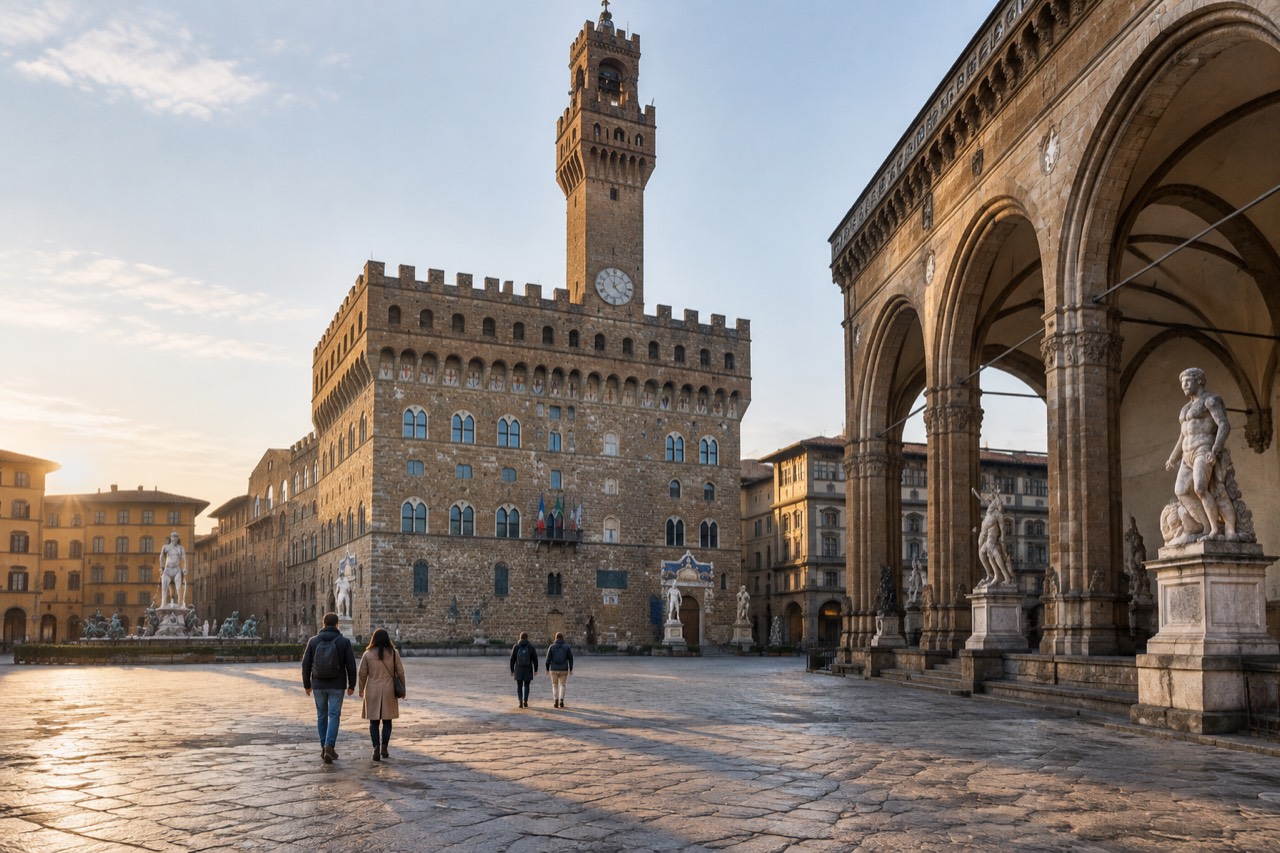
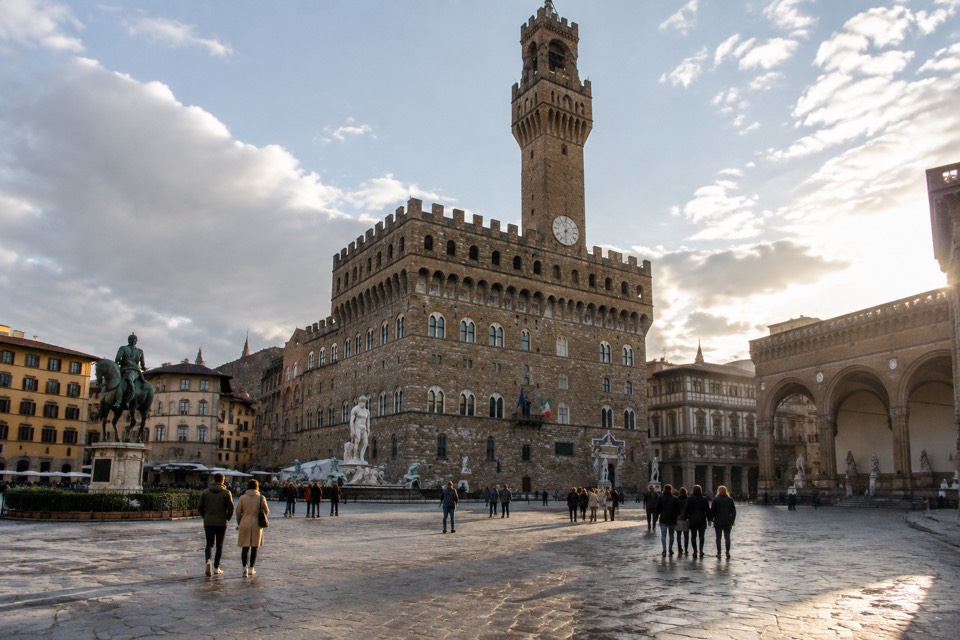
The historic square and its fortress palace hosted outdoor scenes plus key interiors, including the chase through the Salone dei Cinquecento where Langdon deciphers clues. The square is open to the public at no charge, while palace interiors require tickets. Palazzo Vecchio was closed to visitors during filming of the interior scenes, a sign of how much of the building the production occupied. Expect crowds in the square at midday.
The Short Answer
Inferno was primarily filmed in Florence, Italy, where most of the story takes place, using real sites such as Palazzo Vecchio, the Boboli Gardens and the Vasari Corridor. Key sequences were also shot in Venice and Istanbul, while interiors and additional scenes were completed at Origo and Korda Studios in Budapest, Hungary.
Ron Howard's 2016 adaptation of Dan Brown's novel followed Professor Robert Langdon through a trail of clues tied to Dante Alighieri, and the production chose to shoot at the actual landmarks the story describes rather than recreate them. Filming began April 27, 2015, in Venice and wrapped July 21, 2015, in Budapest.
The result is a film that doubles as a guided walk through three of Europe's most photographed cities. Almost every location on screen can be visited today, and most of the Florence sites sit within a short walk of one another.
Every Location At A Glance
| Location | Where | What was filmed | Access |
|---|---|---|---|
| Piazza della Signoria and Palazzo Vecchio | Florence, Italy | Outdoor scenes and interiors including Salone dei Cinquecento chase and clues | Free to see |
| Boboli Gardens | Florence, Italy | Chase sequence through gardens and pathways | Ticketed |
| Baptistery of St. John | Florence, Italy | Discovery of Dante's death mask scene | Ticketed |
| Vasari Corridor | Florence, Italy | Escape route through the corridor connecting sites | Ticketed |
| St. Mark's Square and Doge's Palace | Venice, Italy | Arrival and escape sequences in square and palace | Free to see |
| Hagia Sophia | Istanbul, Turkey | Establishing shots and exterior scenes | Ticketed |
| Basilica Cistern | Istanbul, Turkey | Climax sequences in the underground cistern | Ticketed |
| Hungarian National Museum | Budapest, Hungary | Harvard University flashbacks | Ticketed |
Filming Locations Map
8 locations. The map loads when it scrolls into view.
Map data © OpenStreetMap contributors
Location By Location
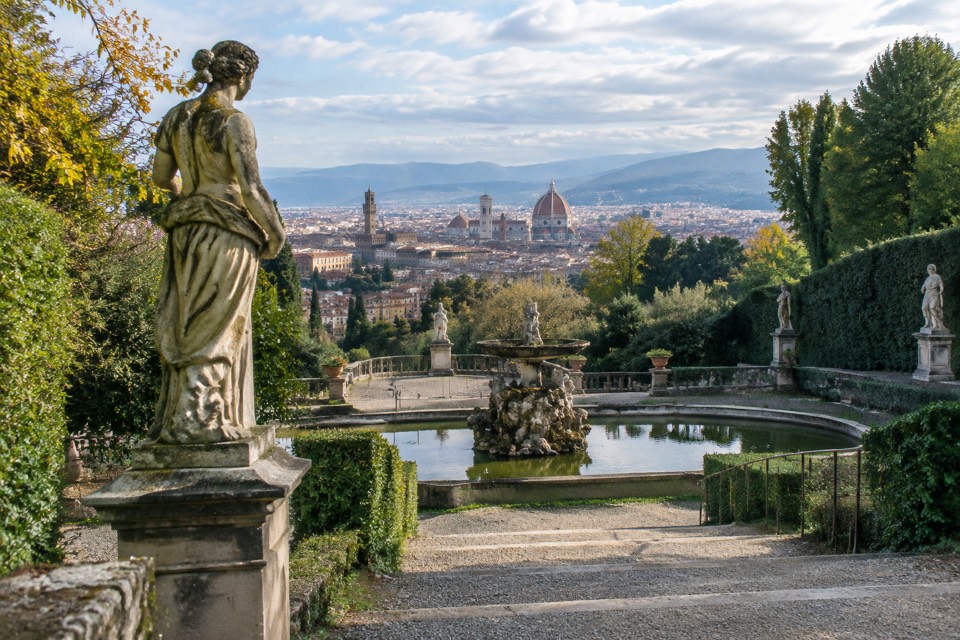
The film's chase sequence sends characters racing through the gardens and pathways behind Palazzo Pitti. Today the Boboli remains one of Florence's great Renaissance gardens, laid out across terraces, grottoes and tree-lined avenues that read exactly as they do on screen. Access is ticketed as part of the Palazzo Pitti complex, and visitors who follow the route of the chase will cover a fair amount of ground, so comfortable shoes help.
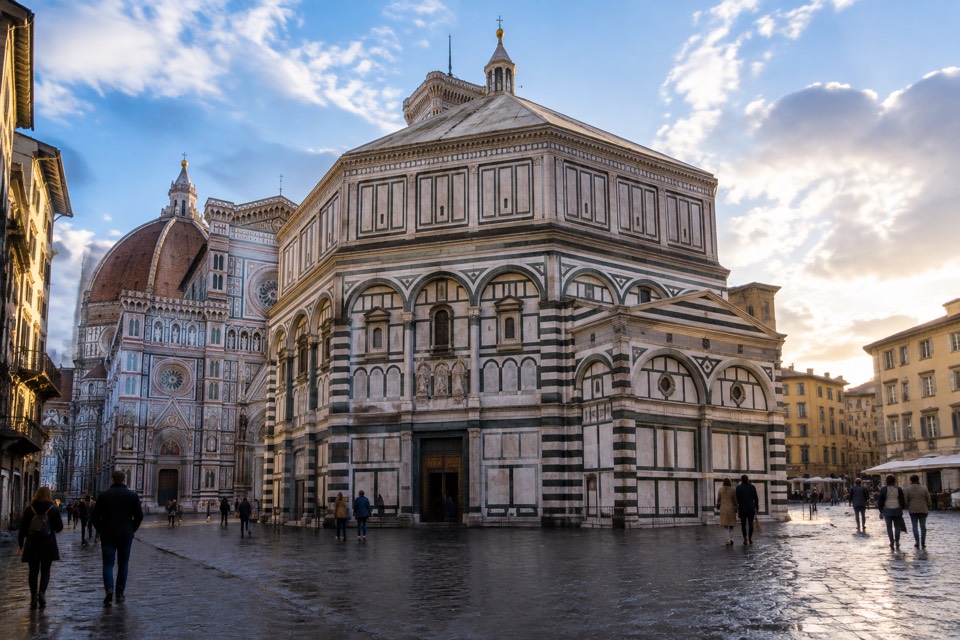
The Baptistery, directly in front of the Duomo, is where the film places the discovery of Dante's death mask, one of the story's central objects. The octagonal building dates to the eleventh and twelfth centuries and is famous for its gilded ceiling mosaics. Entry is ticketed, with combined tickets available that also cover the adjacent cathedral monuments, making it easy to bundle with other Inferno stops in the same visit.
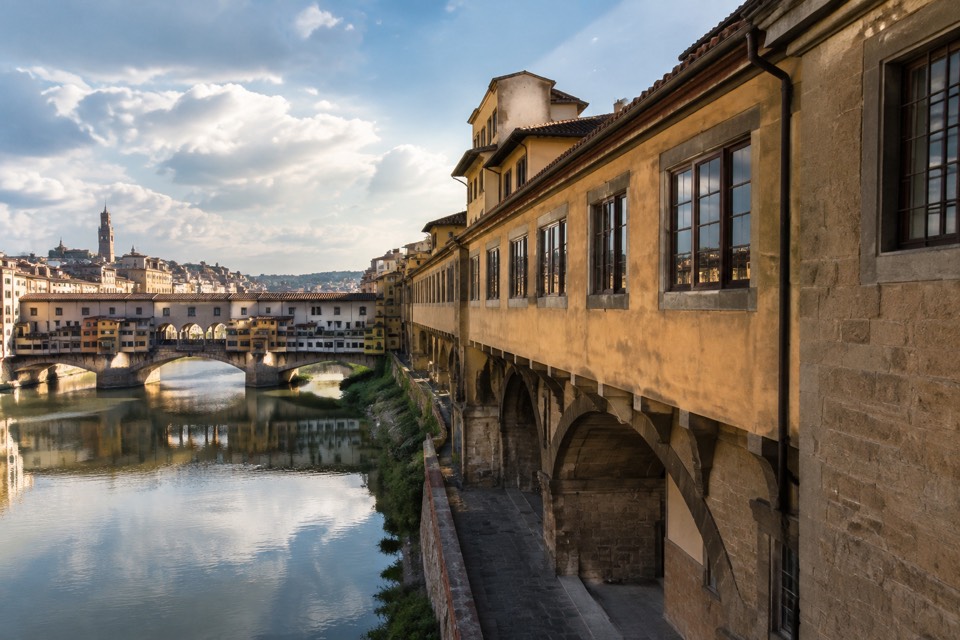
This elevated passage, built in the sixteenth century so the Medici could move between their residences unseen, serves as the escape route connecting several sites in the film. It runs above the Ponte Vecchio and through the Uffizi. Visiting requires joining a guided tour booked in advance, as independent access is not possible, and slots are limited, so reserving early is the practical move for travelers set on walking it.
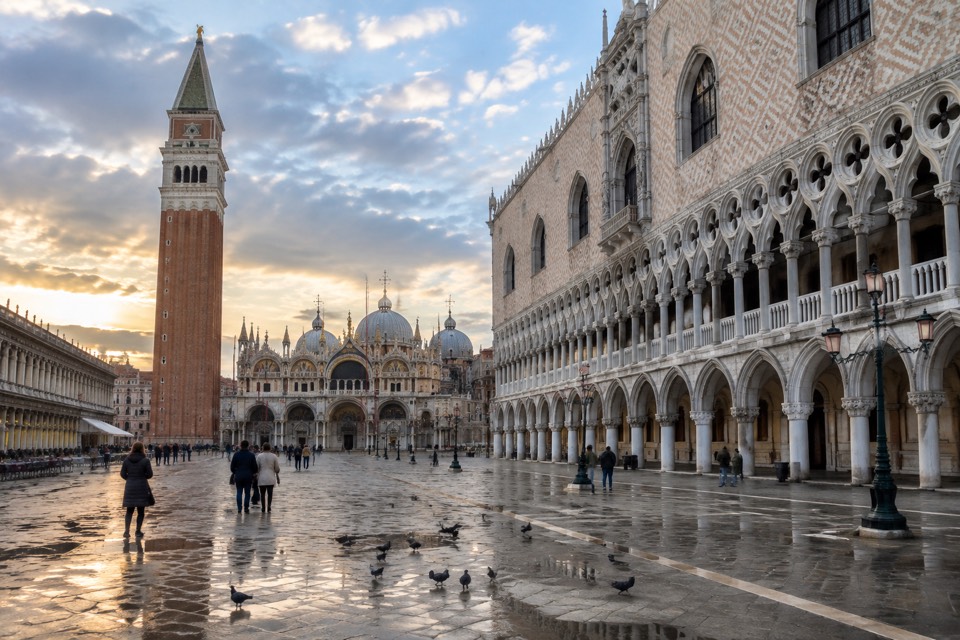
Venice bookends the story, with arrival and escape sequences staged in St. Mark's Square and inside the Doge's Palace. The square itself is public and free, though famously busy, while the palace interiors, including the golden staircase and council chambers, require tickets. Because filming opened here in April 2015, the production captured the landmarks before the summer peak, which is worth remembering when matching shots on a hot July day.
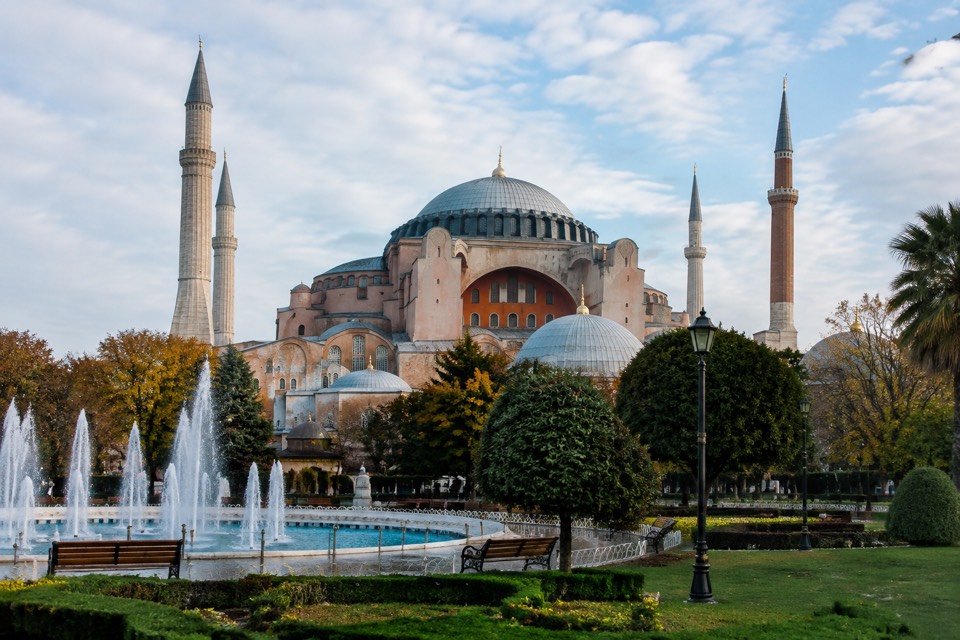
Istanbul's Hagia Sophia appears in establishing shots and exterior scenes as the action shifts to Turkey. The former church, later mosque and museum, is one of the city's defining monuments, with its vast dome and layered history visible from the surrounding squares without a ticket. Entering requires payment of the standard access fee, and modest dress rules apply for the functioning mosque. Early morning visits avoid the longest queues.
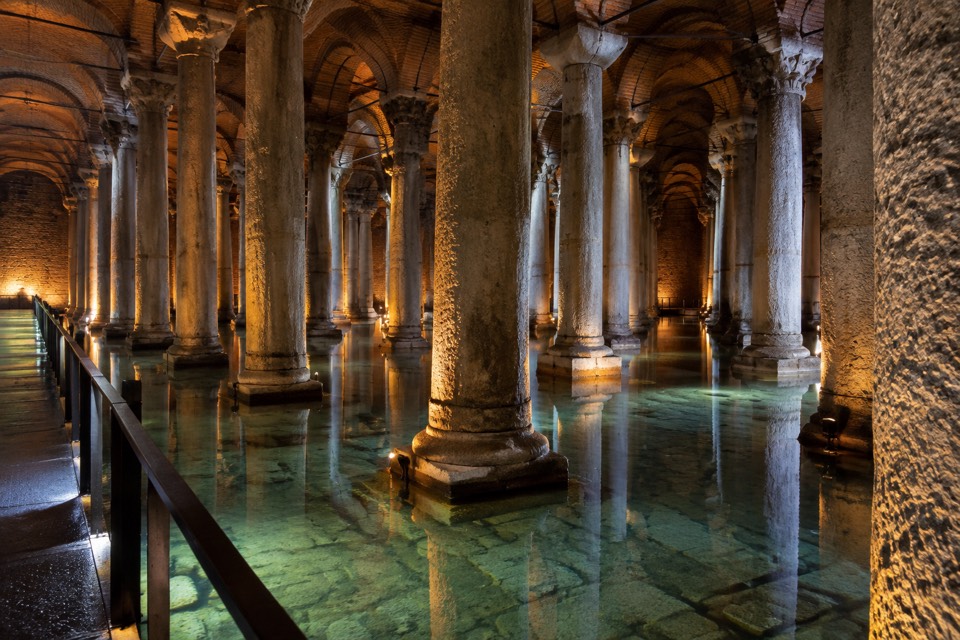
The film's climax unfolds in the underground cistern, a sixth-century water reservoir supported by hundreds of columns, famously including two carved Medusa heads. The production used the Korda Studios water tank for some underwater and cistern scenes, and the real site was closed to the public for 4 days during filming. Entry today requires a ticket, and the dim, atmospheric halls make it one of Istanbul's most popular attractions.
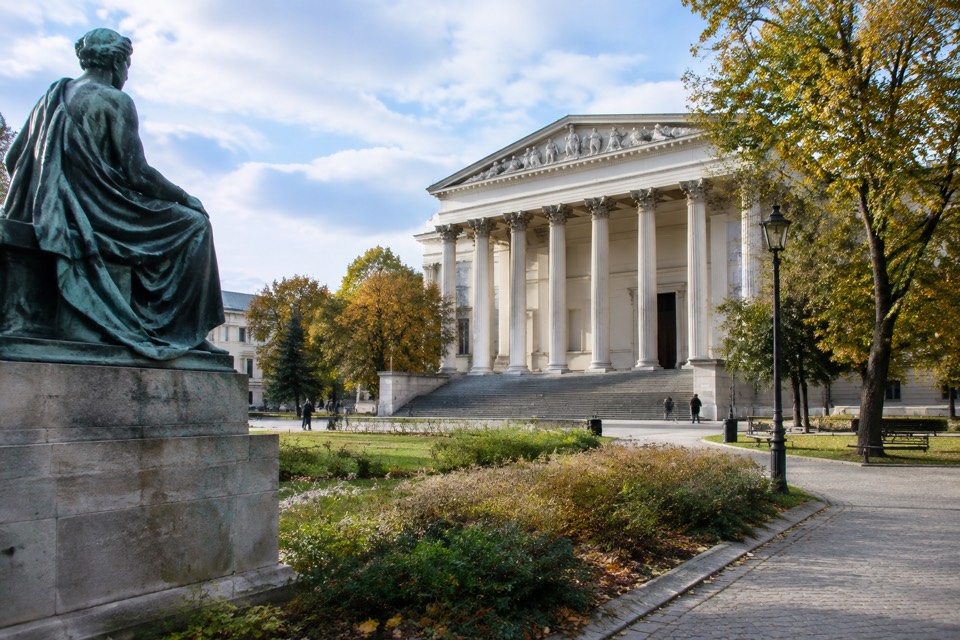
Budapest's Hungarian National Museum doubled for Harvard University in flashback scenes, standing in for the academic world Langdon left behind in Italy and Turkey. The neoclassical building sits on a leafy avenue a short walk from the Danube. It is open to the public with standard admission, and while the Harvard connection is invisible on site, film fans enjoy spotting the staircase and halls that appear in the movie.
Where It Is Set Versus Where It Was Filmed
The story is set in Florence, Venice and Istanbul, and unusually for a studio production, it was largely filmed in those same cities at the real landmarks. Budapest filled the gaps: the Hungarian National Museum stood in for Harvard, Budapest's Museum of Ethnography doubled for sections of Palazzo Vecchio, and Hungarian studios handled interiors and water work.
The Studio Side
Interior scenes and the underwater cistern sequences were completed at Origo Studios in Budapest and Korda Studios in Etyek, Hungary. Neither studio offers public visits tied to the film, though Budapest itself appears on screen through the National Museum and other doubled locations, which brings Hungary into the story for travelers following the trail.
Tours That Visit These Locations
Two bookable tours cover ground from the film, one in Florence and one in Budapest. Neither requires any special knowledge of the book, and both are led in English.
Florence Walking Tour, 2 Hours
Florence: Dan Brown's Inferno 2-Hour Walking Tour
A 2 hour walking tour at $134.12 with 191 reviews behind it, visiting Badia Fiorentina, Piazza del Duomo, Palazzo Vecchio and Piazza della Signoria, the heart of the film's Florence. Guides trace the story's clue trail through the actual squares and buildings seen on screen.
Budapest Film Locations, Private Car
Hollywood film spots in Budapest 2.5 hour private car tour
A 2.5 hour private car tour of Budapest's Hollywood film spots, passing Heroes' Square, the Chain Bridge and Liberty Square, and putting visitors in the Hungarian capital where much of Inferno's production was based. Ideal for pairing with a visit to the Hungarian National Museum.
Frequently Asked Questions
Can you visit the Vasari Corridor seen in Inferno?
Yes, but only on a guided tour booked in advance, since independent access is not permitted. The corridor also closes periodically for maintenance, so check availability before building an itinerary around it.
Was Inferno really filmed inside Palazzo Vecchio?
It was. The palace was closed to visitors during filming of key interior scenes, including the Salone dei Cinquecento sequence. Some other palace interiors were recreated at Budapest's Museum of Ethnography.
How much of the Florence filming can you see on foot?
Most of it. Piazza della Signoria, Palazzo Vecchio, the Baptistery of St. John and the Boboli Gardens sit close together in the historic center, and a two hour walking tour covers the main squares and palaces.
Which Istanbul locations appear in the movie?
Hagia Sophia features in establishing shots and exteriors, while the Basilica Cistern hosts the climax. The cistern was closed to the public for 4 days during filming. Both are ticketed sites within a few minutes' walk of each other.
Why was Budapest involved in the filming?
Origo Studios and Korda Studios in Hungary handled interiors and additional scenes, including underwater work in the Korda water tank. Budapest locations, such as the Hungarian National Museum, also doubled for Harvard flashbacks.
Is the Florence Inferno walking tour suitable for Dan Brown fans only?
No. The tour follows the story's route through Badia Fiorentina, Piazza del Duomo, Palazzo Vecchio and Piazza della Signoria, but it doubles as a solid introduction to central Florence for any visitor.
Few films offer this degree of overlap between story and screen. Travelers can stand in Piazza della Signoria, descend into the Basilica Cistern and cross St. Mark's Square knowing the cast and crew did exactly the same, and the Florence walking tour turns that trail into a single afternoon.