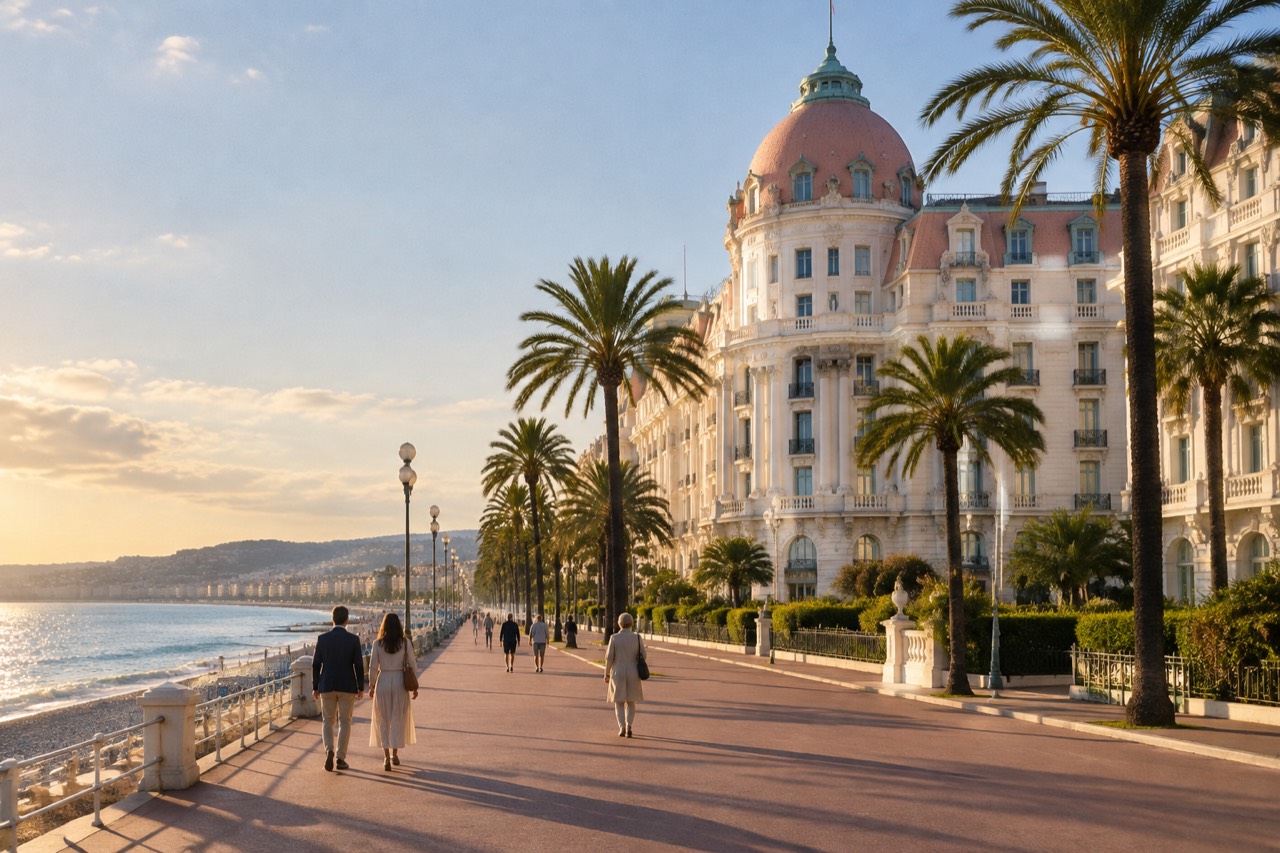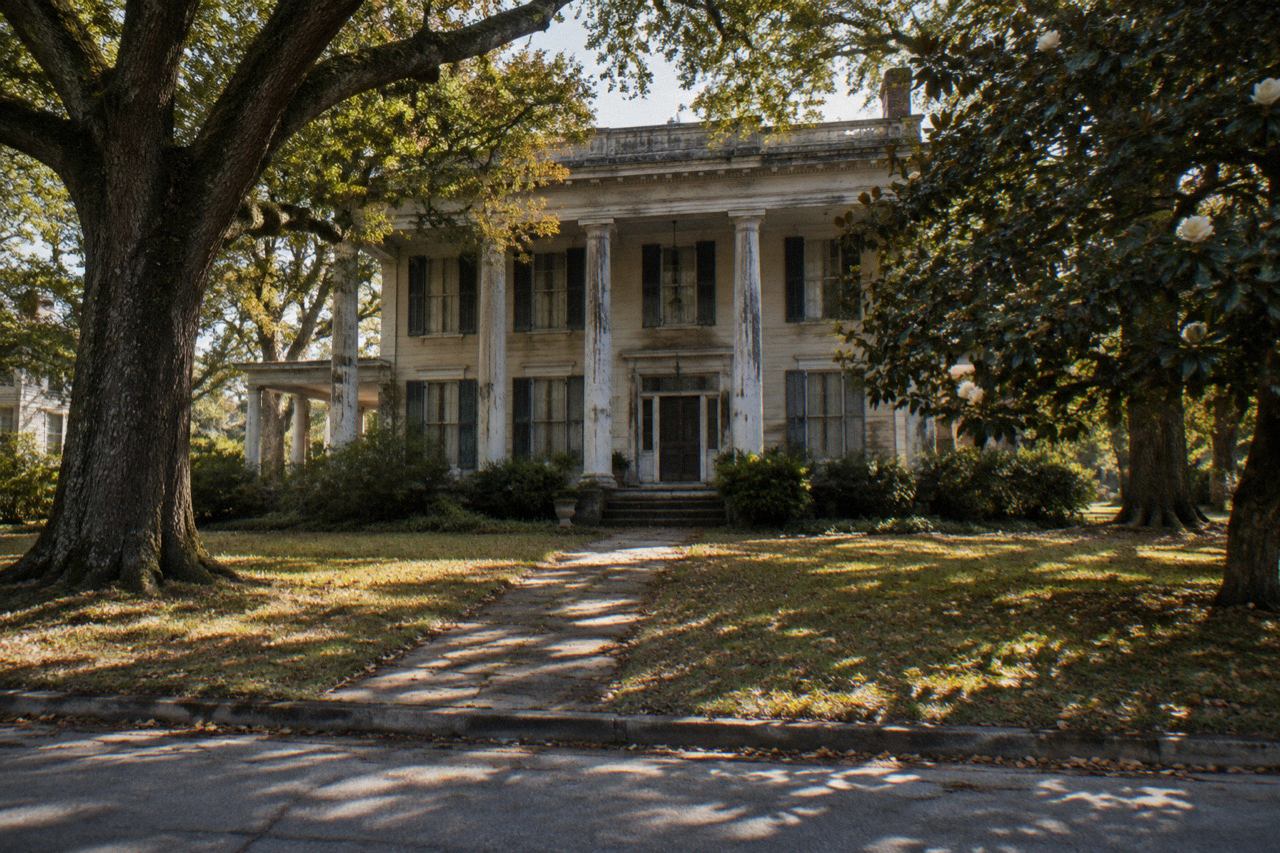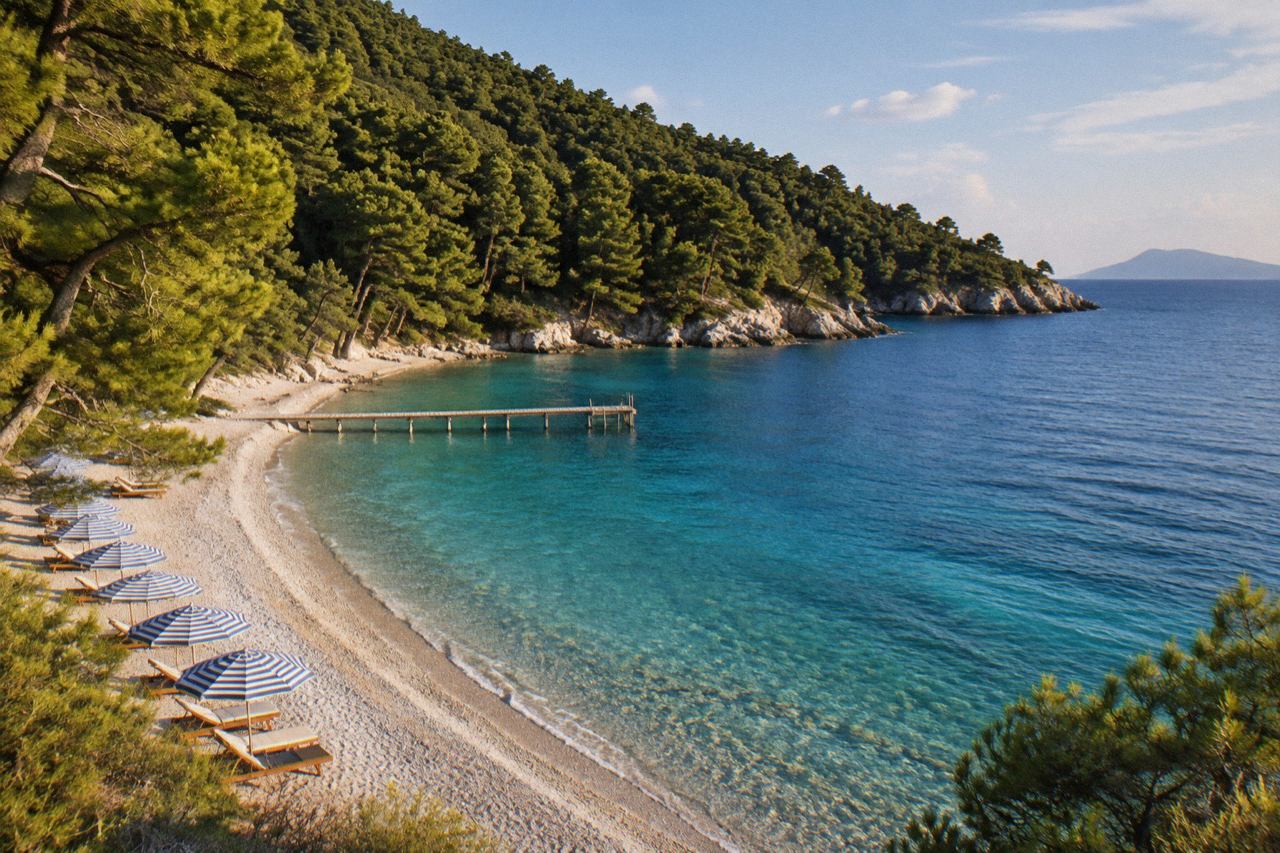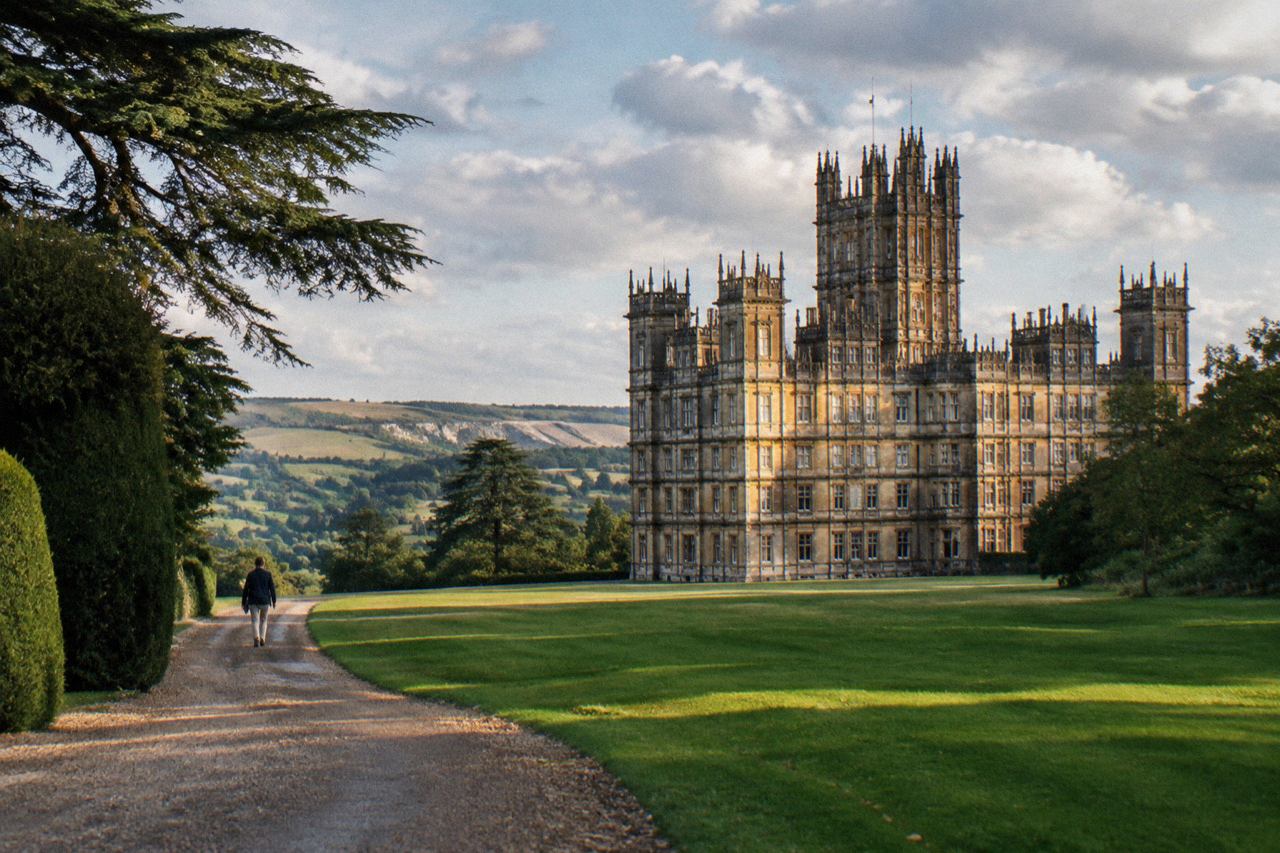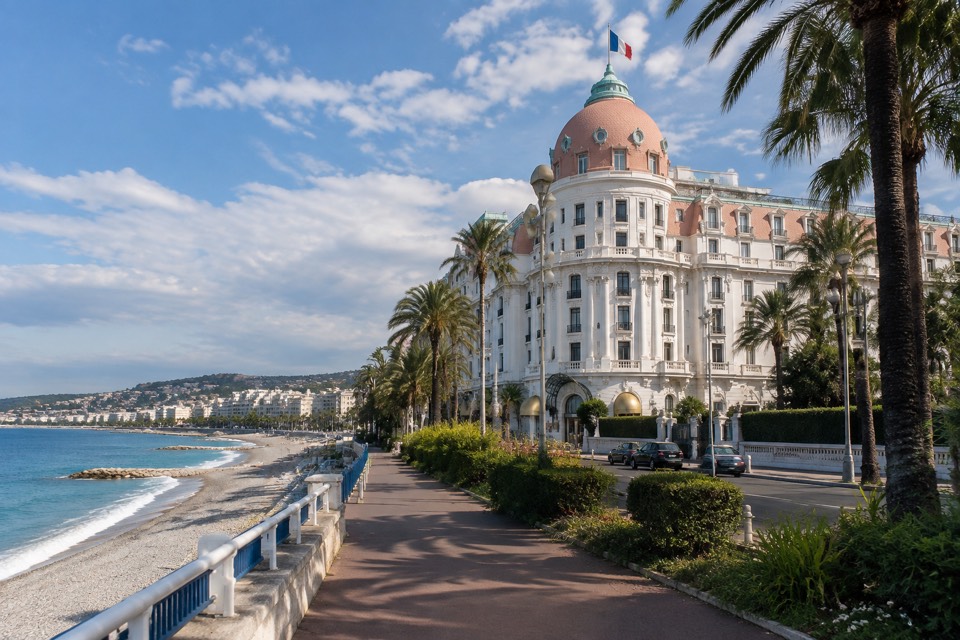
Location 01Hôtel Negresco
Alpes-Maritimes, Nice, France Ticketed
Filmed here: Jackal stays here and learns his cover is blown; calls contact in Paris
The Jackal stays at this seafront hotel in Nice and learns his cover identity has been blown, prompting a panicked call to his contact in Paris. Both the exterior and interiors appear on screen. The Negresco remains one of the most famous hotels on the Promenade des Anglais and is open to guests, so fans can walk in, take a drink, or even book a room where the assassin once plotted.
Location 02Prater Park (Riesenrad)
Vienna, Austria Free to see
Filmed here: Meeting with OAS leaders at 'Pension Kleist'
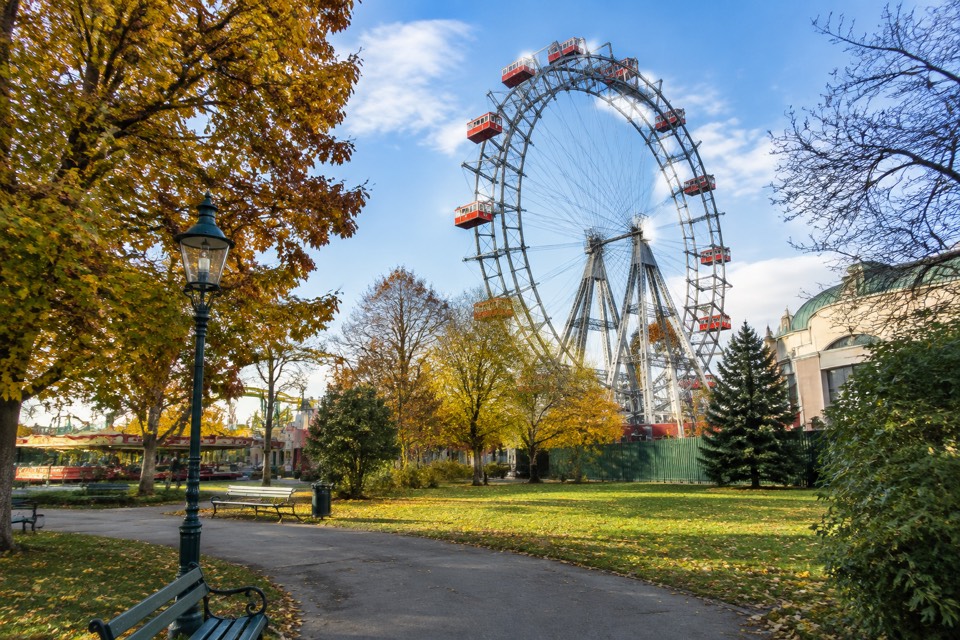
The Vienna amusement park stands in for the fictional Pension Kleist, where the Jackal meets the OAS leadership to accept the contract. The giant Ferris wheel, later famous from other spy films, anchors the scene. The Prater is fully open to the public year round, with no ticket needed to enter the park itself, making it one of the easiest locations on this trail to visit.
Location 03British Museum (Reading Room)
Greater London, London, United Kingdom Free to see
Filmed here: Jackal reads Le Figaro newspaper
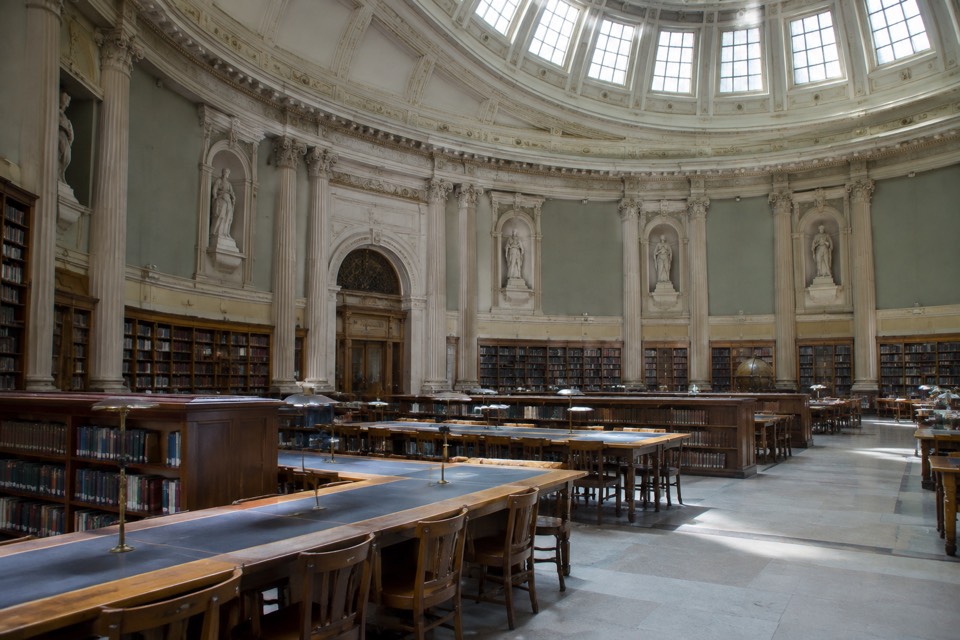
In one of the film's London sequences, the Jackal sits in the Reading Room of the British Museum casually reading Le Figaro. The famous domed hall has been closed to general public access since 2013, so visitors cannot recreate the shot inside. The museum around it, however, remains free and open, and the Reading Room dome can still be viewed from certain angles.
Location 04Somerset House
Greater London, London, United Kingdom Free to see
Filmed here: Jackal obtains false birth certificate
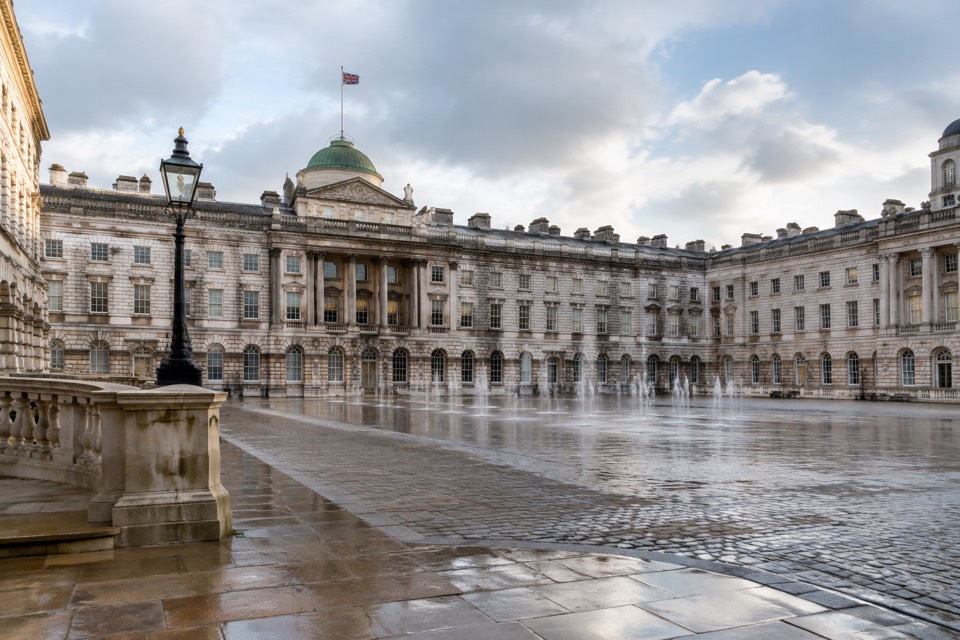
Somerset House on the Strand is where the Jackal obtains a false birth certificate, a key step in building his cover identity. The neoclassical courtyard and galleries seen in the film are still there. Today the building hosts exhibitions and public events, and the courtyard is freely accessible, so fans can stand in the same space with no ticket required for most areas.
Location 05La Bastide de Tourtour
Var, Tourtour, France Ticketed
Filmed here: Hotel where Jackal meets Colette
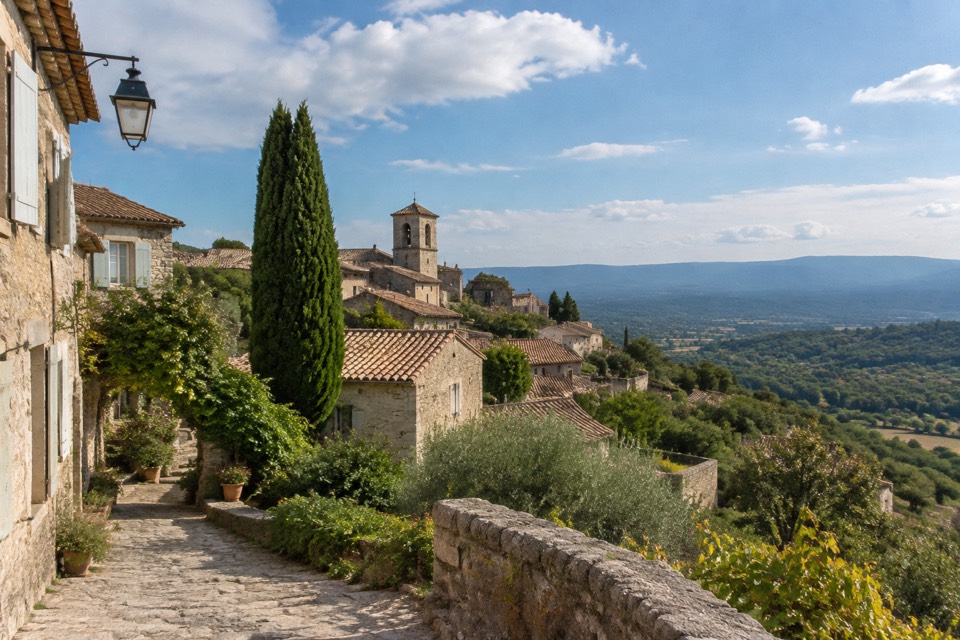
This historic property in the hilltop village of Tourtour in Provence served as the hotel where the Jackal meets Colette de Montpellier. It operates as a hotel today, or is privately held, and access may be restricted depending on the current arrangement. Travellers hoping to see it should check ahead, though the village itself, often ranked among France's prettiest, rewards the detour.
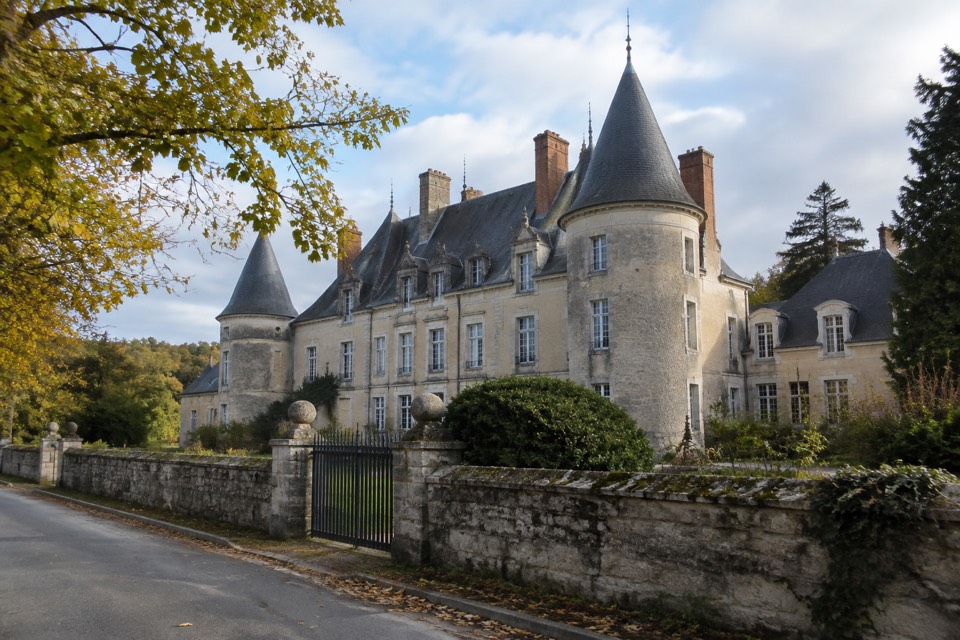
Location 06Château du Saussay
Essonne, Ballancourt-sur-Essonne, France Private property
Filmed here: Colette de Montpellier's residence
The château near Ballancourt-sur-Essonne in the Essonne region south of Paris plays the residence of Colette de Montpellier, whose involvement in the plot turns fatal. It is a private château with limited public access, so filming location hunters generally have to content themselves with an exterior view. Check locally before travelling, as occasional events may open the grounds.
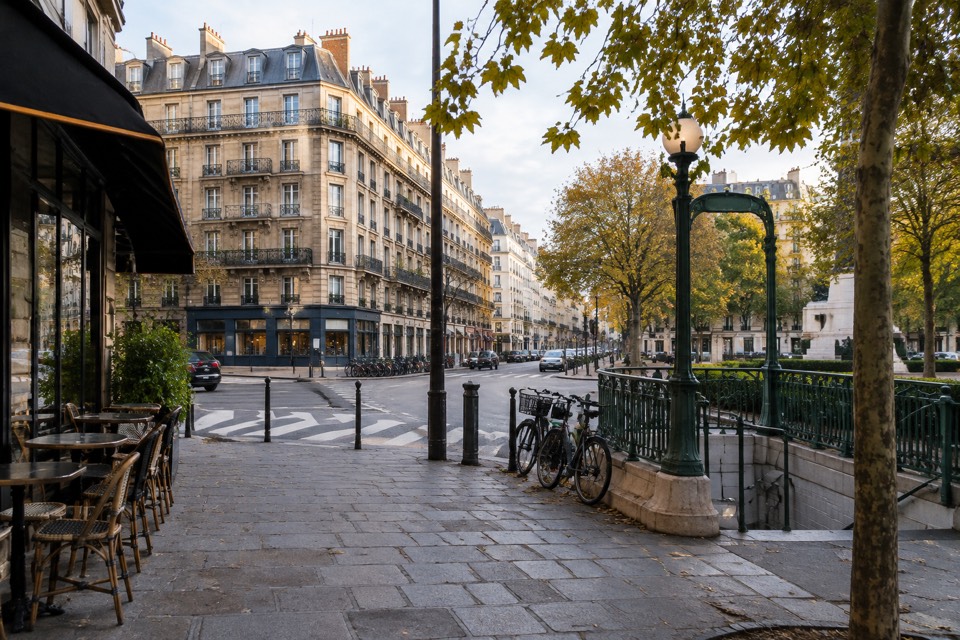
Location 07150 Rue de Rennes / Place du 18 Juin 1940
Île-de-France, Paris, France Free to see
Filmed here: Jackal's assassination attempt on de Gaulle from hotel window
This Paris address near Montparnasse station is where the Jackal rents a room and fires his custom rifle at de Gaulle from a hotel window in the film's climax. The square and street are ordinary public space, freely walkable at any hour. Visitors standing at Place du 18 Juin 1940 can look up and imagine the window, with the Montparnasse tower now dominating the skyline.
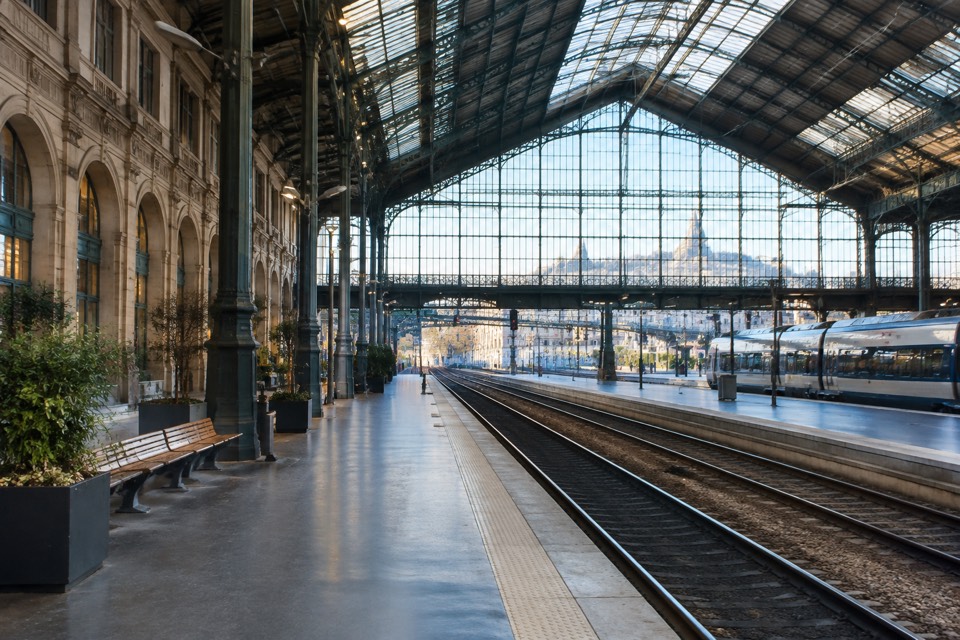
Location 08Gare d'Austerlitz
Île-de-France, Paris, France Free to see
Filmed here: Train arrival scene
Austerlitz station in eastern Paris appears in a train arrival scene as the manhunt closes in. It remains an active terminus serving regional and intercity routes, so it is fully open to the public with no ticket needed to enter the concourse. Its location on the Left Bank makes it an easy add-on to a walking route taking in Place Vauban and the Rue de Rennes site.
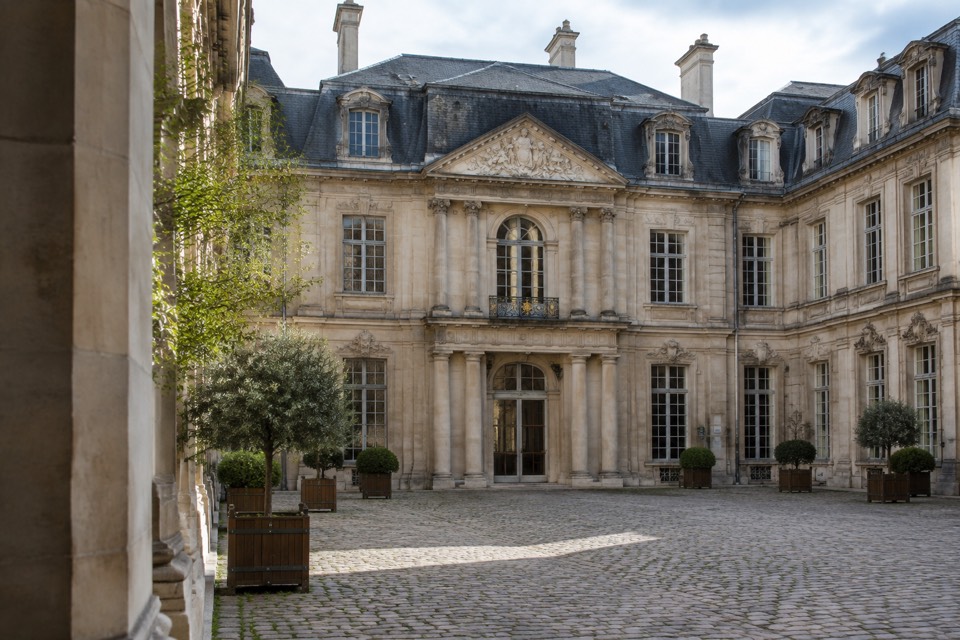
Location 09Archives Nationales (Hôtel de Soubise)
Île-de-France, Paris, France Free to see
Filmed here: Standing in for Élysée Palace
The elegant Hôtel de Soubise in the Marais district stood in for the Élysée Palace, the presidential residence, because the real palace was far harder to film. It houses the National Archives and a museum, both open to visitors for an entry fee. Film fans can explore the very interiors where the film's political drama unfolds, then wander the historic district around it.
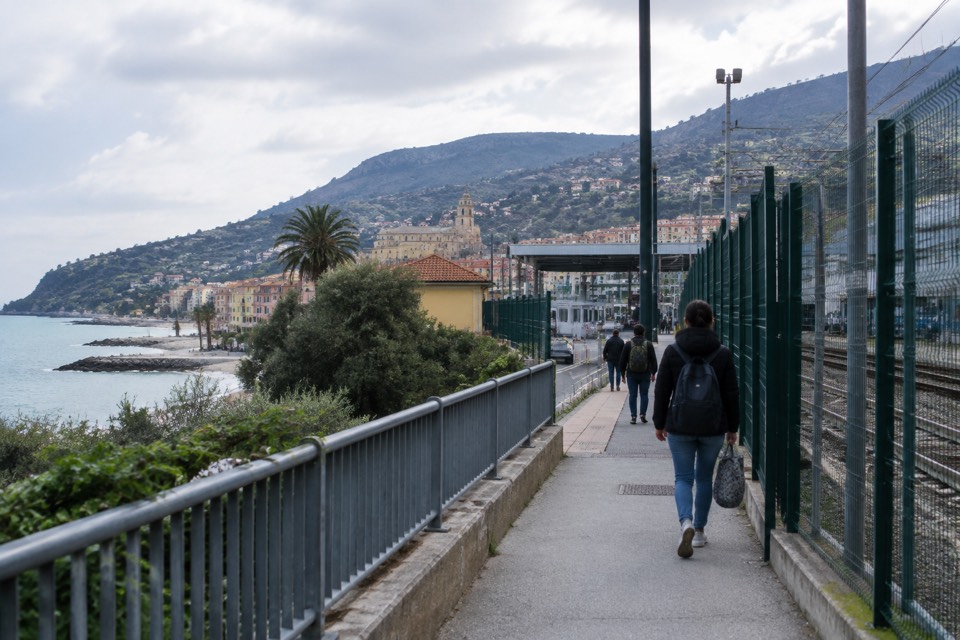
Location 10Ventimiglia border area
Liguria, Ventimiglia, Italy Free to see
Filmed here: Border crossing back into France
The coastal road near the French border at Ventimiglia in Liguria is where the Jackal crosses back into France during his journey. The area is public and easily reached by road or rail along the Riviera coast, sitting close to the Monaco frontier. Travellers can drive or take the scenic coastal route and pass the same Mediterranean landscapes seen in the film.
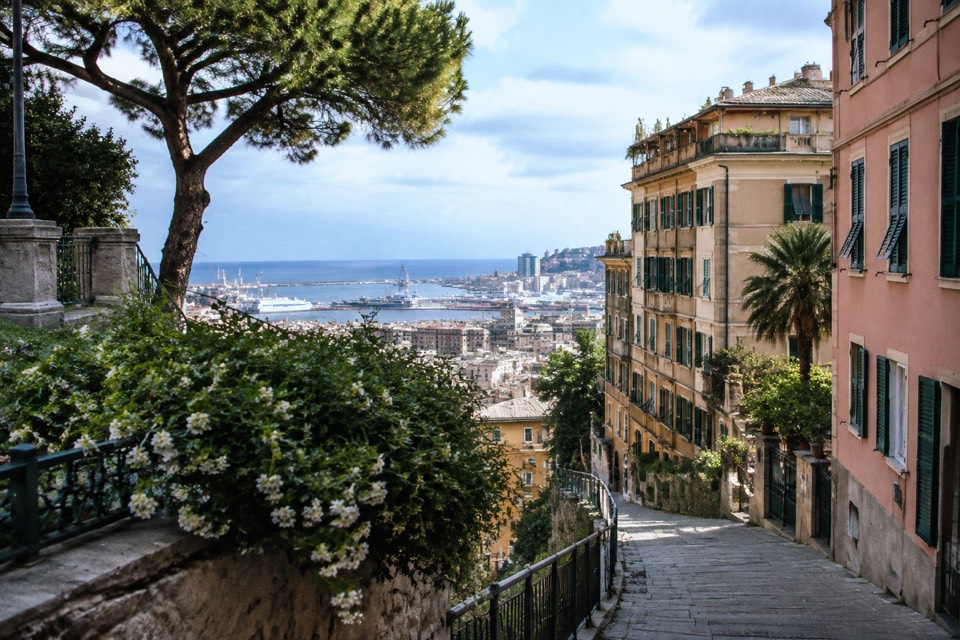
Location 11Hotel Colombia area / Genoa
Liguria, Genoa, Italy Outside only
Filmed here: Jackal collects custom rifle and fake ID
In Genoa's historic port city, the Jackal collects his custom-made rifle and a false identity document from a shady contact. The specific hotel may vary and the scene is best matched by exterior views rather than an exact address. Genoa itself is a rewarding stop, with a medieval centre, the old port and a working harbour atmosphere that has drawn film productions for decades.
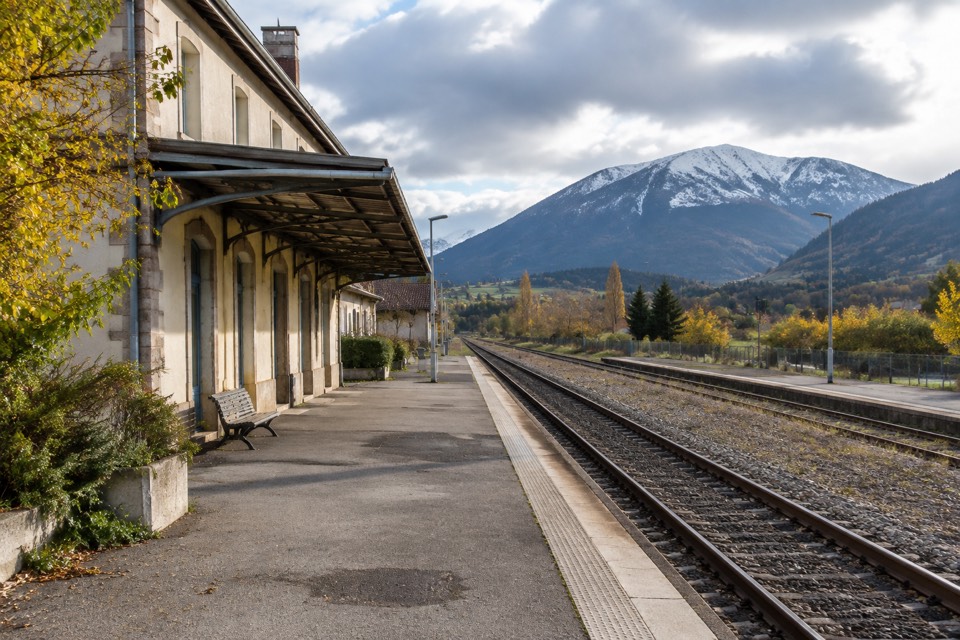
Location 12Veynes train station
Hautes-Alpes, Veynes, France Free to see
Filmed here: Train station scene (as Tulle)
This small station in the Hautes-Alpes, in rural southern France, doubled as Tulle for a train station scene during the manhunt. It is still an active station serving regional lines, so access is public and free. Getting there requires commitment, as Veynes sits deep in the Alps, but for completists it offers one of the film's most untouched locations.
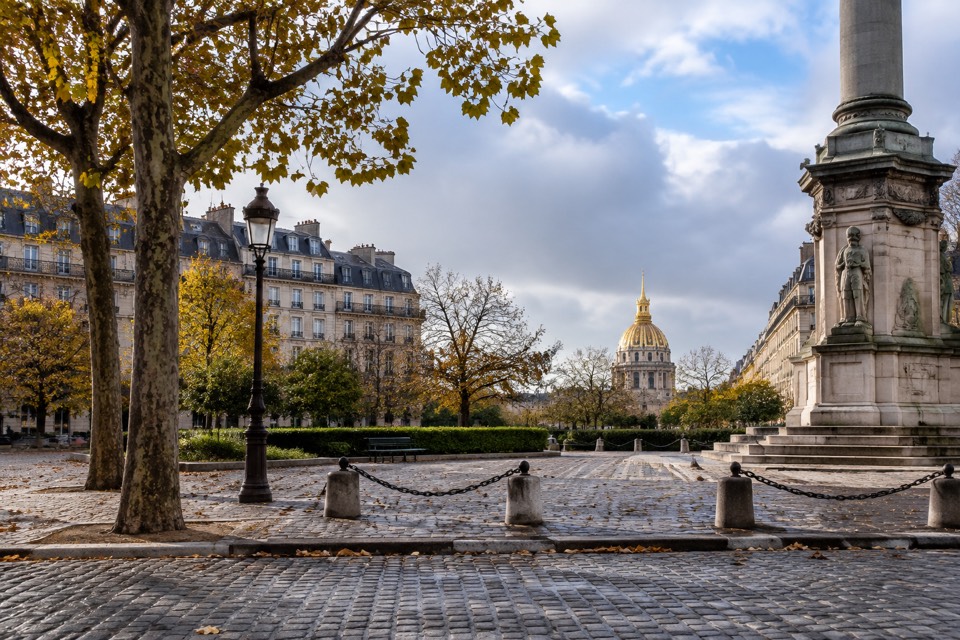
Location 13Place Vauban
Île-de-France, Paris, France Free to see
Filmed here: Biker stops to place phone call
This quiet square near Les Invalides in Paris is where the motorcyclist courier stops to place a phone call, one of the small procedural beats that give the film its tension. It is an ordinary public square, open at all times and a short walk from the Hôtel des Invalides. Fans can combine it easily with the nearby Rue de Rennes and Austerlitz locations in one day.