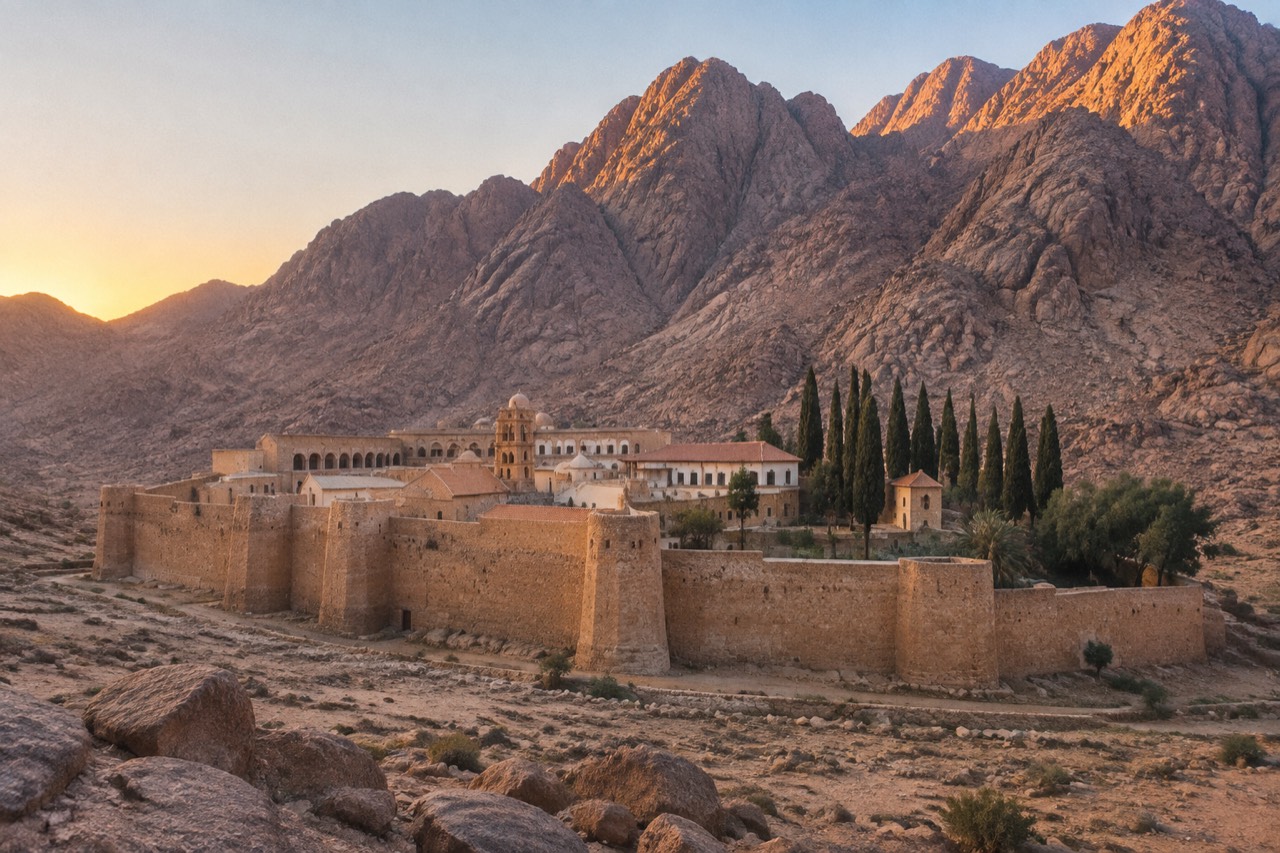
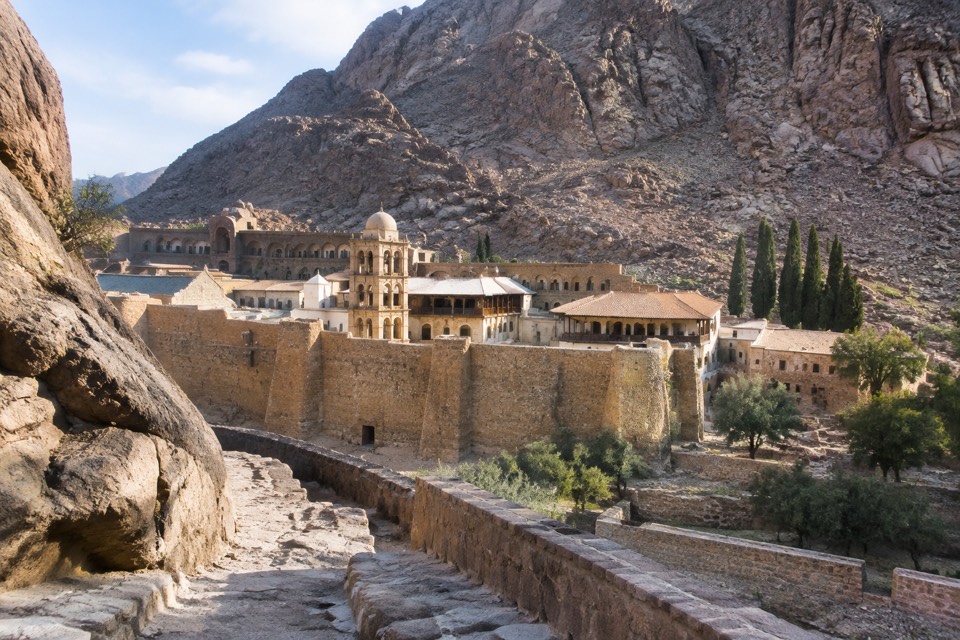
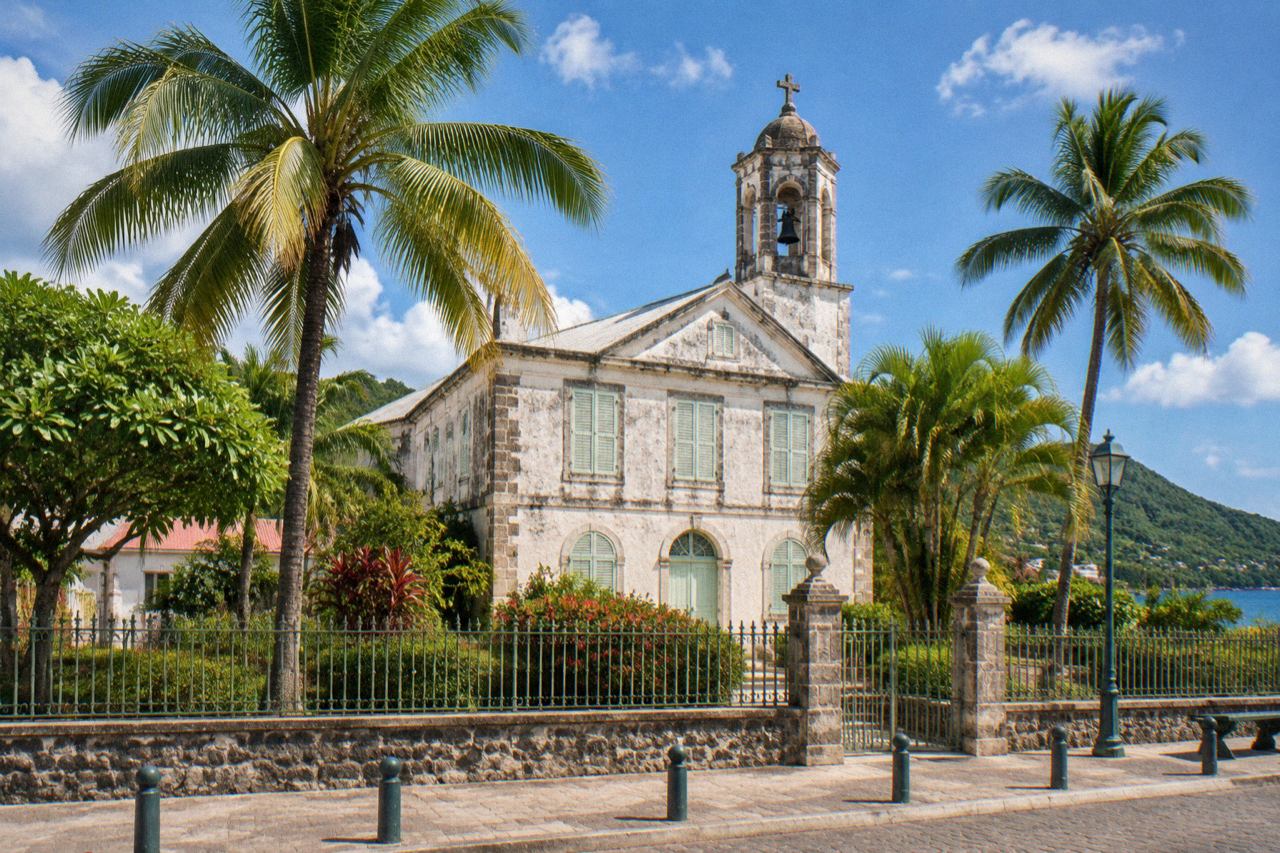
The Burning Bush scene was filmed at the foot of Mount Sinai, at this working monastery that is one of the oldest continuously inhabited Christian communities in the world and a UNESCO site. Visitors today can see the church, a museum, and a renowned collection of icons. Access is by ticket and modest dress is required. It sits beside the main trailhead for climbing Mount Sinai, so most travelers combine the two in a single trip, often overnight to reach the summit at dawn.
The Short Answer
The 1956 epic was filmed in two main places. Interiors, effects, and the Red Sea parting were shot on the Paramount Studios lot in Hollywood, using a 360,000 gallon water tank. Location work took place across Egypt, including Mount Sinai, St. Catherine's Monastery, Luxor, and areas near Cairo, plus American deserts such as Red Rock Canyon in California and Monument Valley in Arizona.
Cecil B. DeMille's 1956 biblical epic spared no expense. With a budget of $13 million, it was the most expensive film ever made at the time, and it went on to gross over $122 million in its initial release. The production split its time between controlled studio work in Los Angeles and ambitious location shooting in Egypt, where a special unit spent three months in 1954 hauling VistaVision cameras, sometimes by camel.
Most of the locations used remain reachable today, from a working studio backlot in Hollywood to a UNESCO listed monastery at the foot of Mount Sinai. Some sites, like Luxor's temple complexes, have drawn travelers for centuries. Others, such as the rural Beni Youssef area near Cairo, take more effort and planning.
Every Location At A Glance
| Location | Where | What was filmed | Access |
|---|---|---|---|
| St. Catherine's Monastery | Saint Catherine, Egypt | Burning Bush scene at foot of Mount Sinai | Ticketed |
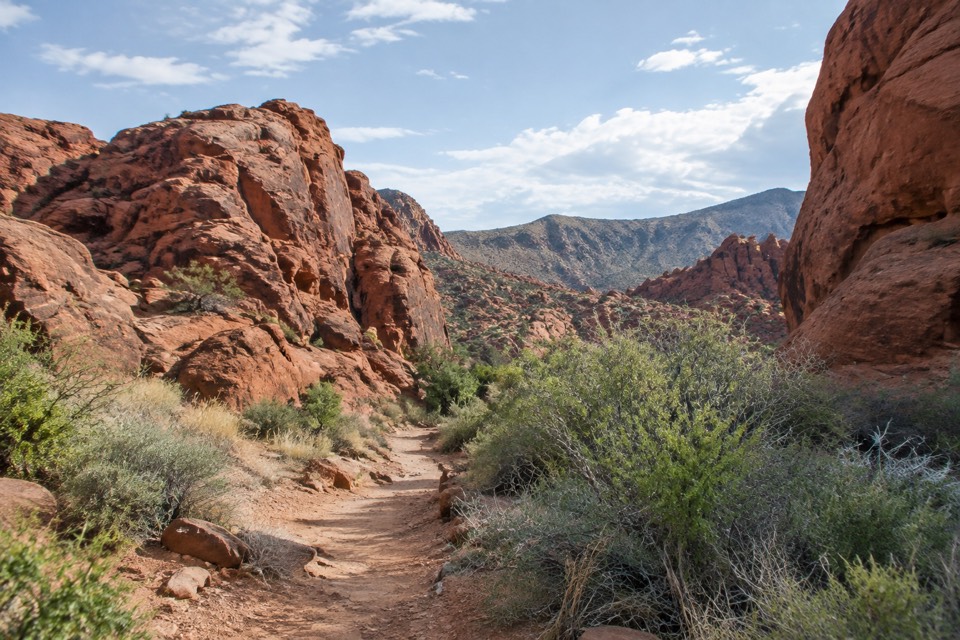
| Red Rock Canyon State Park | Cantil, United States | Outdoor desert scenes | Free to see |
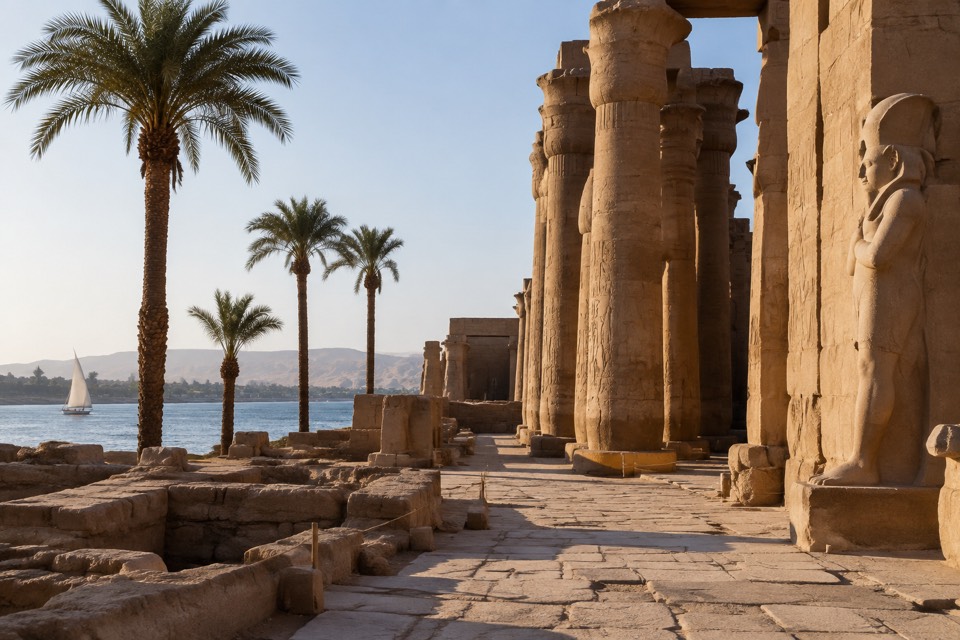
| Luxor | Luxor, Egypt | Temple complex scenes including Karnak | Ticketed |
| Mount Sinai (Ras Safsafa area) | Saint Catherine, Egypt | Mount Sinai and related biblical scenes | Free to see |
| Abu Rudeis | Abu Rudeis, Egypt | Background for parting of the Red Sea | Outside only |
| Monument Valley | Oljato-Monument Valley, United States | Desert landscape scenes | Free to see |
| Paramount Studios backlot | Los Angeles, United States | Interiors, Red Sea parting sequence tank, many sets | Private property |
| Beni Youssef area near Cairo | Beni Suef area, Egypt | Treasure City of Pharaoh Sethi and Exodus scenes | Outside only |
Filming Locations Map
8 locations. The map loads when it scrolls into view.
Map data © OpenStreetMap contributors
Location By Location
This stark California desert park stood in for outdoor desert scenes, its layered cliffs and badlands giving DeMille convincing biblical terrain without leaving the state. Today it is a public state park with hiking trails and camping, and an entry fee applies. The dramatic rock formations remain popular with film crews, so the scenery will look familiar to movie fans. It sits near Cantil in the California desert and works well as a day trip from Los Angeles.
Temple complex scenes, including sequences at Karnak, were shot in Luxor, whose monumental columns and courts matched the film's ancient Egyptian setting. It remains one of the world's great archaeological destinations, with the temples of Luxor and Karnak, the Valley of the Kings nearby, and a steady stream of Nile cruises and guides. Access to the sites is by ticket, and guided tours are recommended given the scale and history involved. Expect serious heat at any time of year.
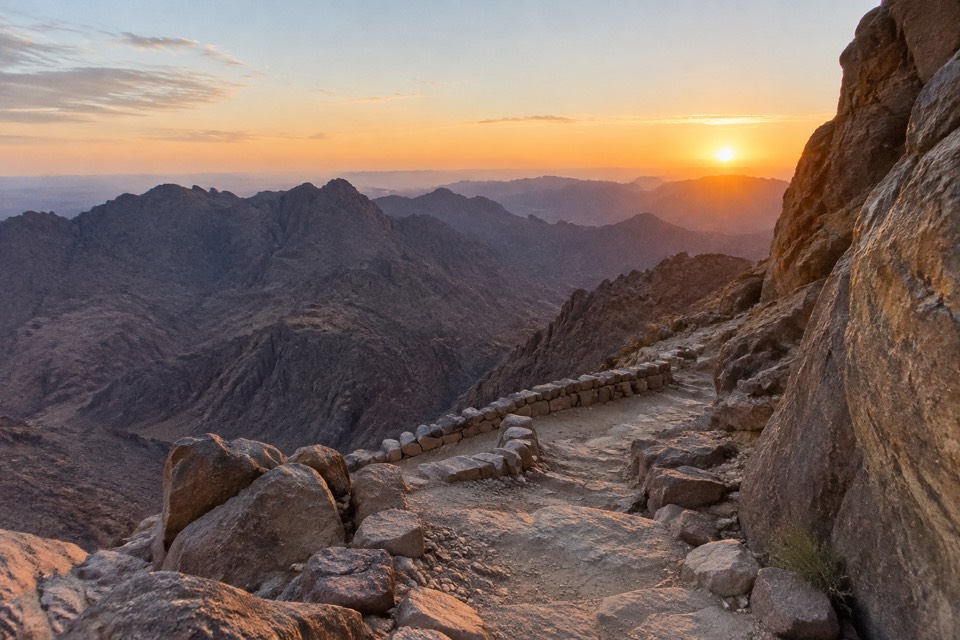
Mount Sinai and related biblical scenes were filmed in the Ras Safsafa area of the mountain sacred to Judaism, Christianity, and Islam. Today visitors hike established trails to the summit, and guided tours are common. The climb is strenuous, taking several hours on foot or partly by camel, and most travelers start before dawn to catch sunrise from the top. The mountain sits beside St. Catherine's Monastery, so the two sites are almost always visited together.
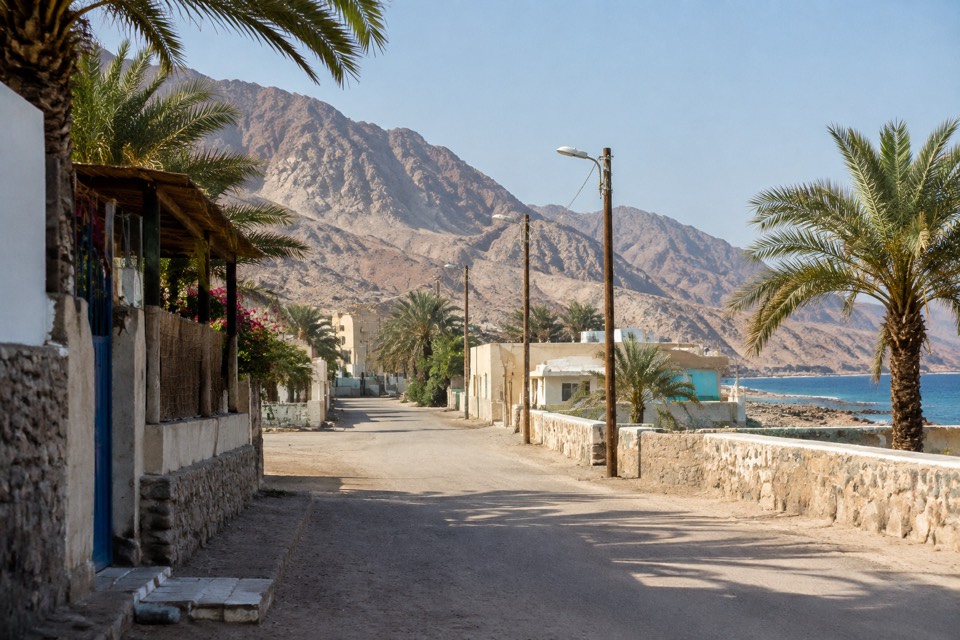
This coastal area of South Sinai provided background scenery for the parting of the Red Sea. It is far less developed than Egypt's main tourist corridors, with limited tourism infrastructure, so travelers should check local access conditions before attempting a visit. There are no film related markers or formal sites here, and the appeal is mainly for dedicated location hunters curious about where DeMille's camera pointed. Most visitors to the region base themselves in Saint Catherine or the Sinai coast instead.
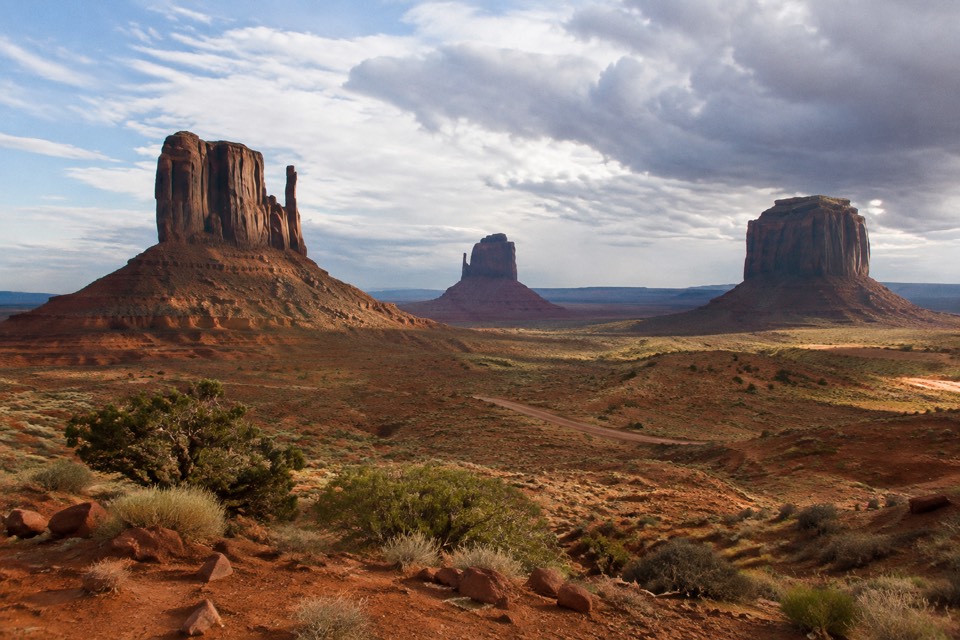
Desert landscape scenes were shot in Monument Valley, the sweeping sandstone butte country on the Arizona Utah border. It is a Navajo Nation tribal park, open to the public with an entry fee, and guided tours led by Navajo guides are available for areas beyond the main scenic drive. The towering mesas have appeared in countless westerns and remain one of the most recognizable landscapes in American cinema. A visitor center and overlooks sit inside the park.
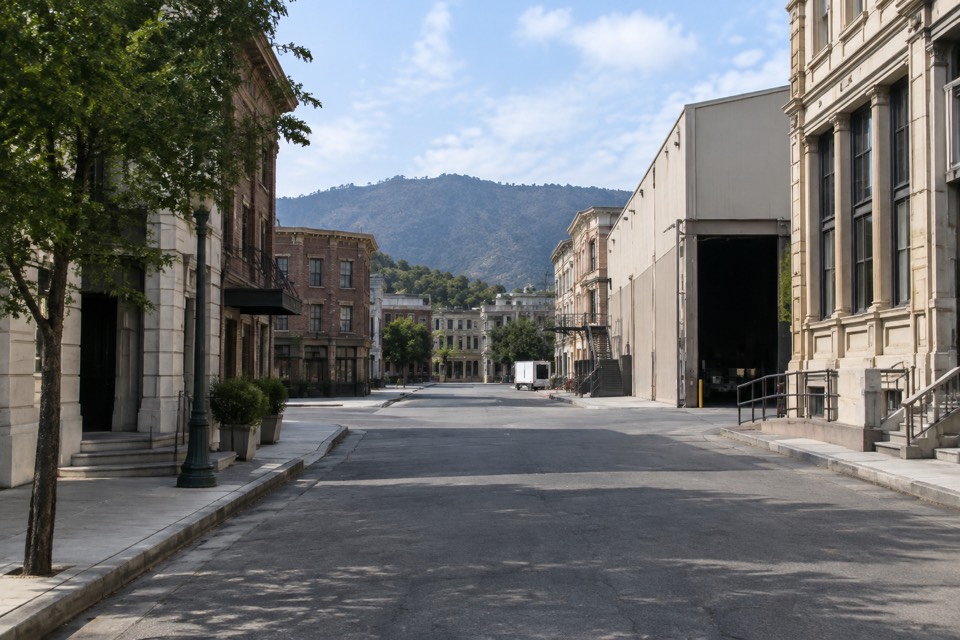
Interiors, many of the film's massive sets, and the famous Red Sea parting sequence were all created here. The parting effect used a giant tank holding 360,000 gallons of water and took six months and $1 million to complete. The lot itself is private, though Paramount offers public studio tours of its grounds and facilities. Those tours do not include specific sets from this 1956 production, but standing on the lot where the sequence was engineered is a draw for film historians.
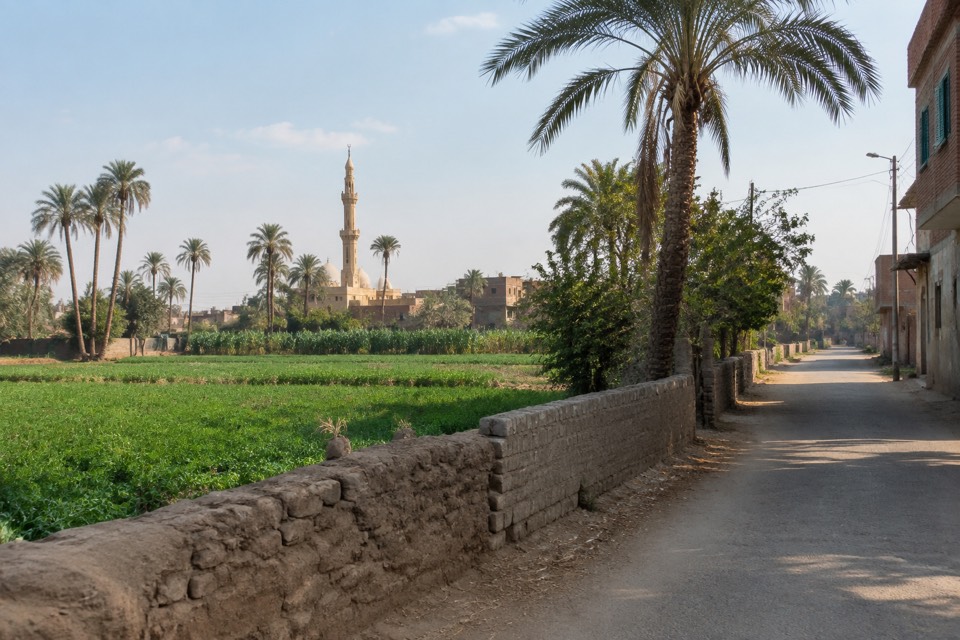
The Treasure City of Pharaoh Sethi and the Exodus scenes were filmed in this rural area south of Cairo. It was here that DeMille staged some of the film's biggest crowd work, with up to 25,000 extras and 15,000 animals used in Exodus sequences spanning three miles. There is little specific visitor infrastructure today and limited access to exact filming spots, so the site is of interest mainly to completists. Travelers usually pass through the region between Cairo and points south.
Where It Is Set Versus Where It Was Filmed
The story is set in ancient Egypt and the Sinai Peninsula, following Moses from the Pharaoh's court to Mount Sinai. The filming followed a similar geography more literally than most productions of the era: Egypt supplied Sinai, Luxor, and locations near Cairo, while California's Red Rock Canyon and the Paramount lot, plus Monument Valley in Arizona, filled in the rest. Few biblical epics can claim this much authentic regional shooting.
The Studio Side
Paramount Pictures in Los Angeles carried the bulk of the production. Beyond interiors, the studio handled the enormous effects work, including the Red Sea tank sequence. Related set construction at the time reached remarkable scale, with one exterior City of the Pharaoh set reported at 10 acres in the Guadalupe dunes. Paramount's Hollywood lot still operates today and admits visitors on general studio tours, though no tour covers this film's specific sets.
Tours That Visit These Locations
Only one bookable experience connects directly to this production, and it is a general studio tour rather than a Ten Commandments specific outing. It still puts travelers on the historic Paramount lot where the film's most famous sequence was built.
Hollywood Studio Lot Tour
Paramount Pictures Studio Tour
This Paramount Pictures studio tour includes the Blue Sky Tank, the water tank facility on the same lot where DeMille's 360,000 gallon Red Sea tank once stood. With 91 reviews, it is the closest a traveler can get to the production's Hollywood home base.
Frequently Asked Questions
Was The Ten Commandments actually filmed in Egypt?
Yes. A special unit shot in Egypt for three months in 1954, filming at Mount Sinai, St. Catherine's Monastery, Luxor, Abu Rudeis, and the Beni Youssef area near Cairo. VistaVision cameras were transported to some locations by camel.
Where was the parting of the Red Sea filmed?
The sequence was filmed on the Paramount Studios backlot in Hollywood, in a massive tank holding 360,000 gallons of water. It took six months and $1 million to complete. Abu Rudeis on the Egyptian coast supplied background scenery.
Can you visit the Paramount filming locations?
The Paramount lot in Los Angeles is private but offers public studio tours. These cover the studio's facilities, including the Blue Sky Tank area, but not specific sets from the 1956 film, since those no longer exist.
Is Mount Sinai open to visitors?
Yes. Mount Sinai has hiking trails to the summit, and guided tours are common. The climb is strenuous, and dawn is considered the best time to reach the top. St. Catherine's Monastery at its base is also open to ticketed visitors who dress modestly.
How many extras were used in the Exodus scenes?
Up to 25,000 extras and 15,000 animals were used in the Exodus sequence, which spanned three miles. The scenes were filmed in the Beni Youssef area near Cairo.
What deserts in the United States appear in the film?
Red Rock Canyon State Park in California stood in for desert scenes, and Monument Valley in Arizona provided additional desert landscapes. Both remain public parks that travelers can visit today, with entry fees and, in Monument Valley's case, Navajo guided tours.
Few epic productions leave this many visitable footprints. A traveler can stand in a Sinai monastery, hike the mountain where the film's most sacred scenes were shot, walk through Karnak's columns in Luxor, and end the trip on a working Hollywood lot where the Red Sea was parted in a tank. Egypt offers the deepest connection for location hunters, while California and Arizona provide accessible alternatives for travelers staying stateside.