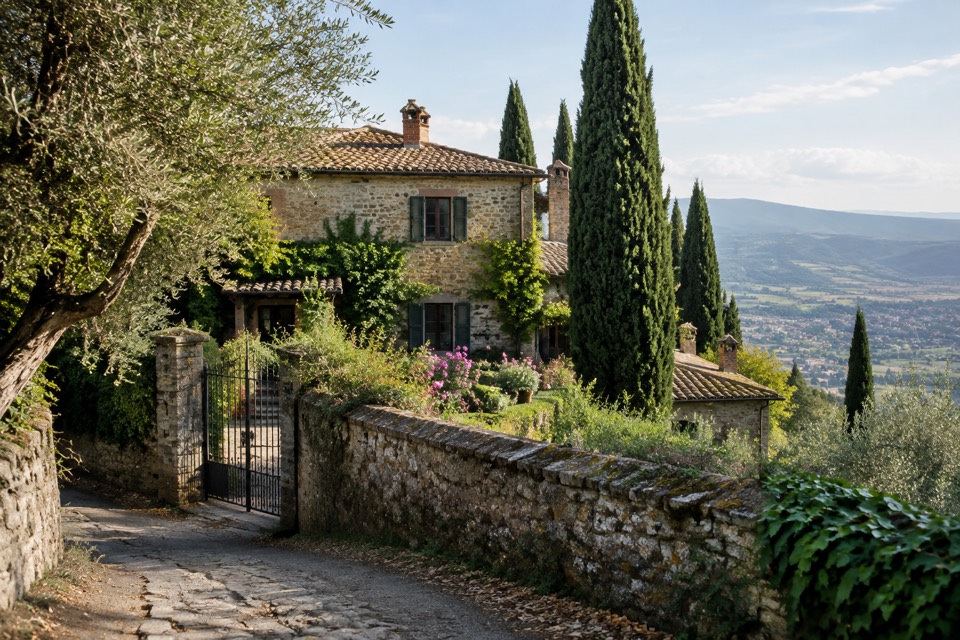
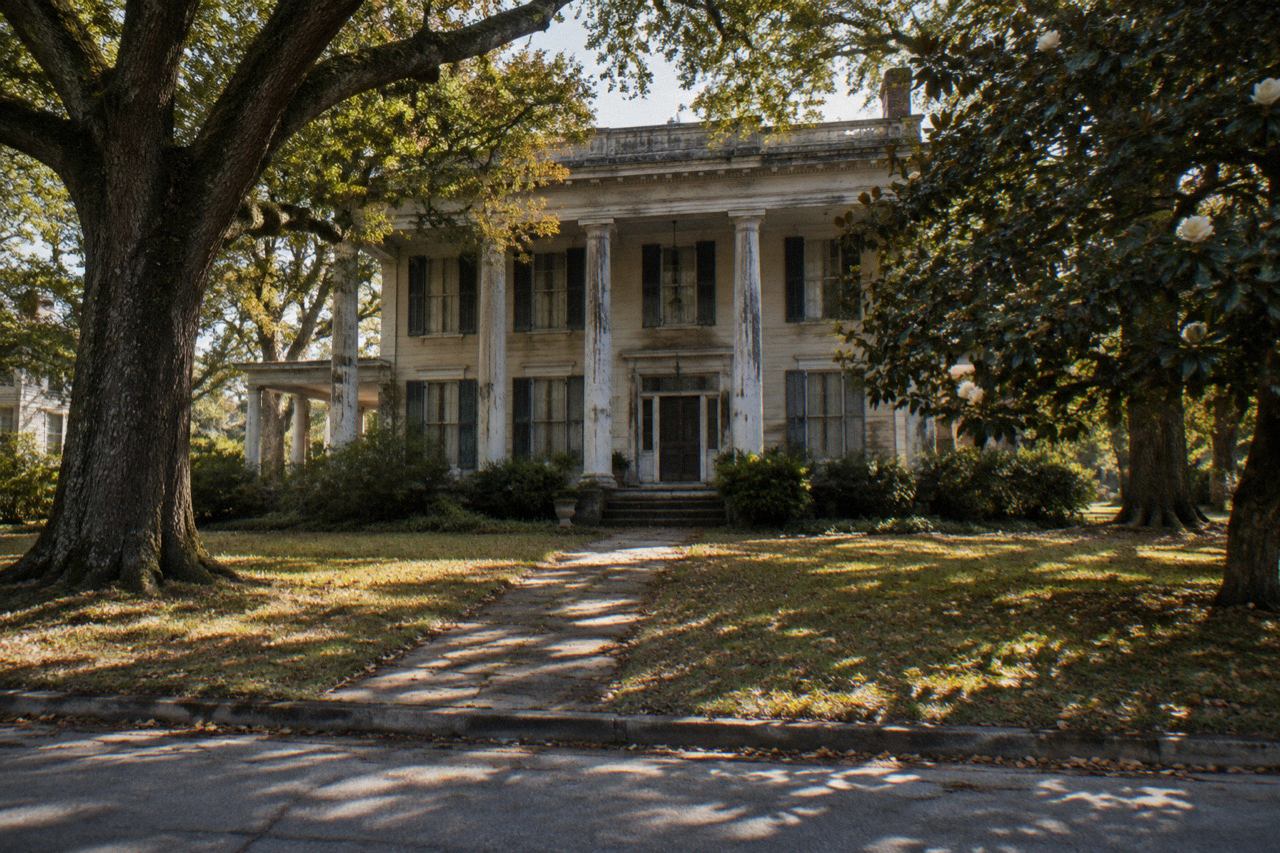
The villa Frances buys and renovates was played by Villa Laura, not the real Bramasole. Author Frances Mayes' actual home was already fully renovated, so the production needed a genuine fixer-upper nearby. Both exteriors and interiors appear in the film. Villa Laura is private property and can only be viewed from the road. The real Mayes villa is nearby and equally off limits, so manage expectations before making the walk.
The Short Answer
Under the Tuscan Sun was filmed mainly in and around Cortona, a hill town in Tuscany, Italy. Villa Laura stood in for Bramasole because the author's real villa was already renovated. Further scenes were shot in Florence, Montepulciano, Positano, and Rome, with some interiors recreated at Cinecittà Studios in Rome.
Audrey Wells' 2003 adaptation of Frances Mayes' memoir traded soundstage fakery for the real thing. Filming ran from September to November 2002, mostly in Tuscany, and the production's choice of authentic locations shows in nearly every frame.
The result is a film you can largely walk through today. Cortona remains the beating heart of it, but the movie also spreads out to Florence, Montepulciano, the Amalfi Coast, and Rome, and the tourist crowds have followed. Cortona saw a measurable tourism boost after release.
Every Location At A Glance
| Location | Where | What was filmed | Access |
|---|---|---|---|
| Villa Laura (Bramasole) | Cortona | Frances' villa exteriors and interiors | Private property |
| Piazza della Repubblica | Cortona | Market scene and daily life | Free to see |
| Piazza Signorelli | Cortona | Fountain scene (fountain added for film) and town life | Free to see |
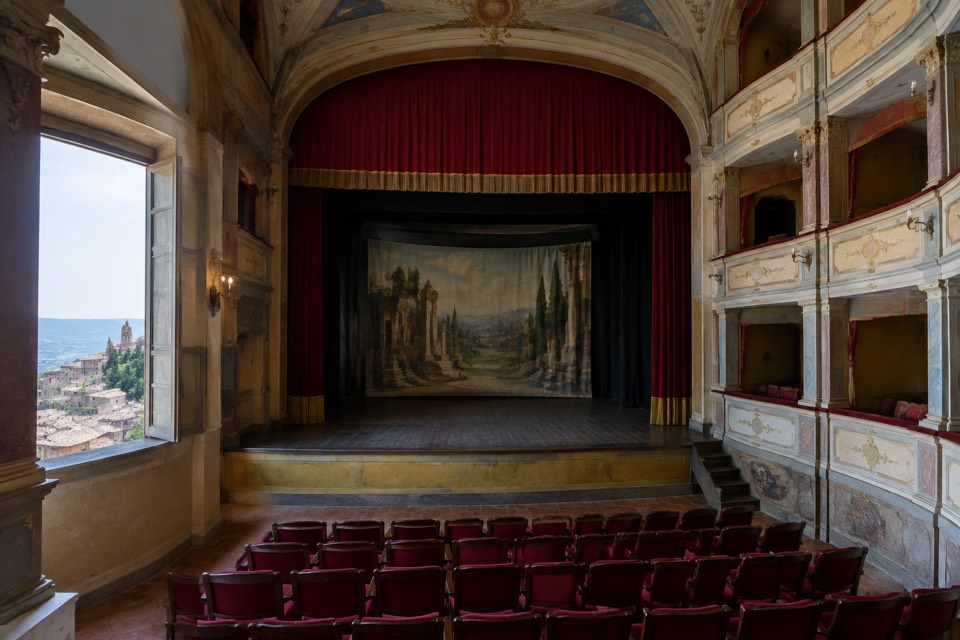
| Teatro Signorelli | Cortona | Movie date scene interiors | Ticketed |
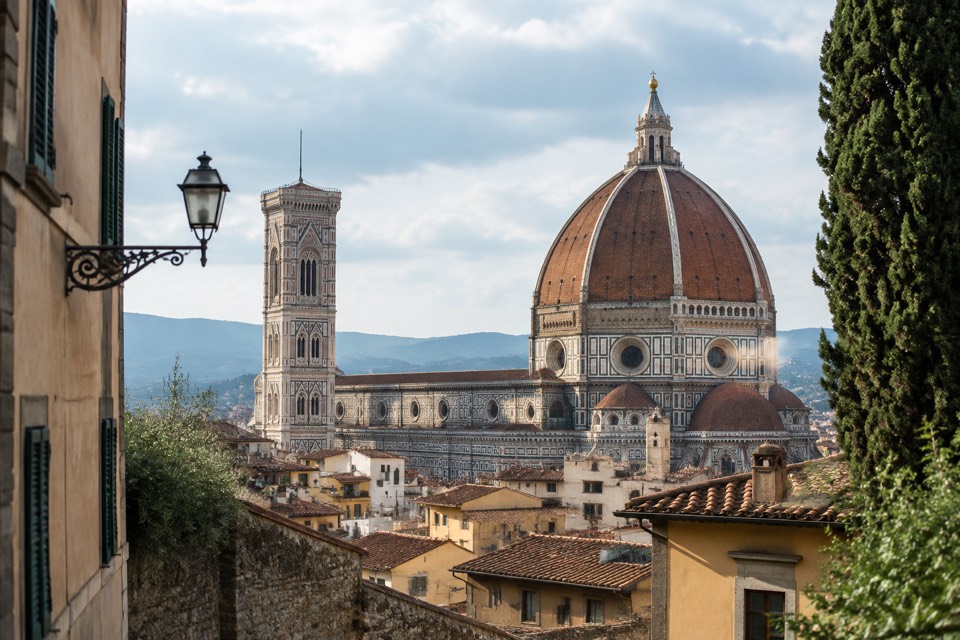
| Florence Cathedral (Duomo) | Florence | Tour stop and transitional scenes | Free to see |
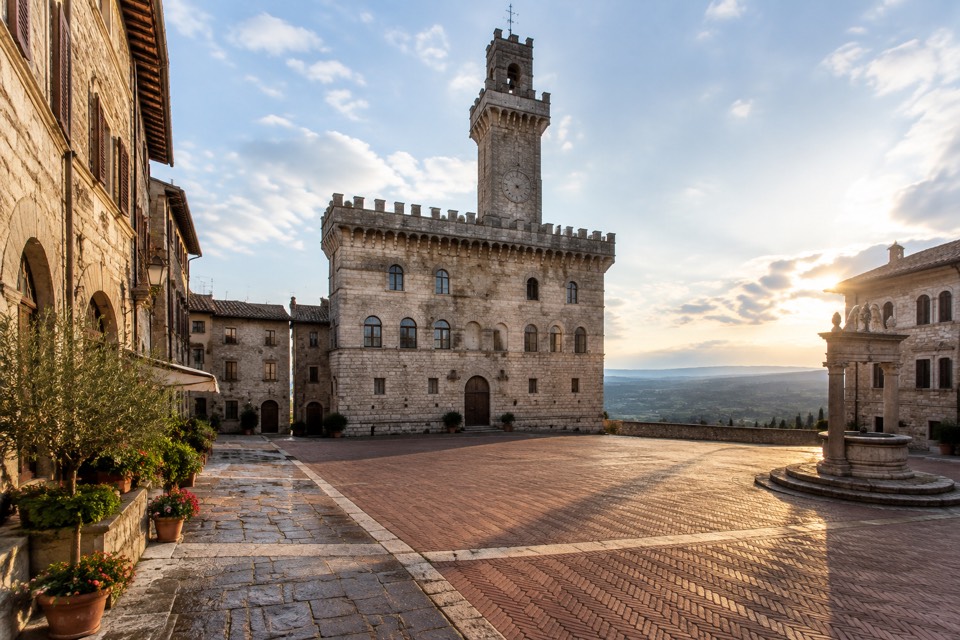
| Piazza Grande | Montepulciano | Flag-waving ceremony and exterior scenes | Free to see |
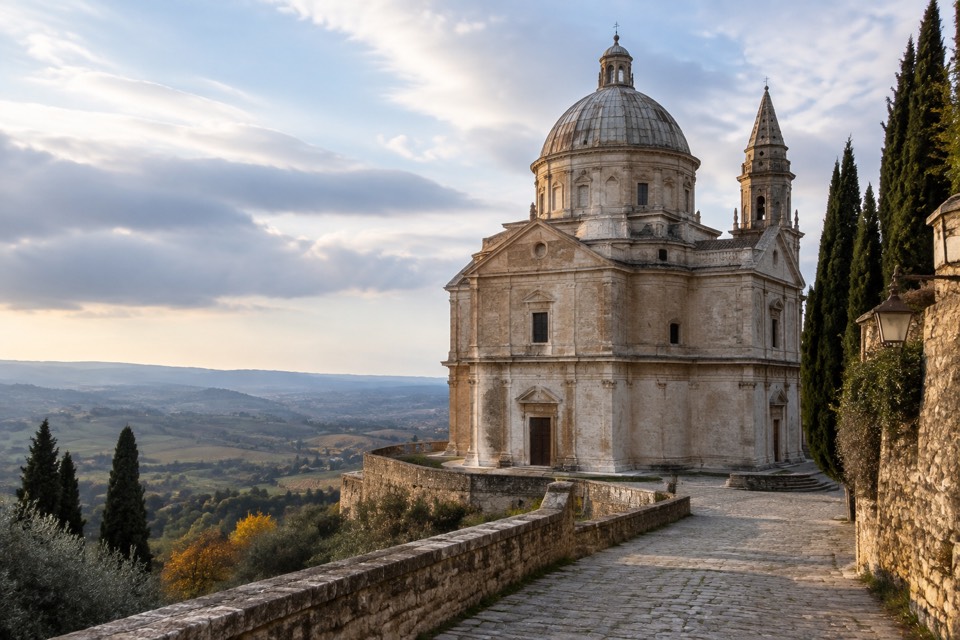
| Sanctuary of the Madonna di San Biagio | Montepulciano | Wedding scene | Free to see |
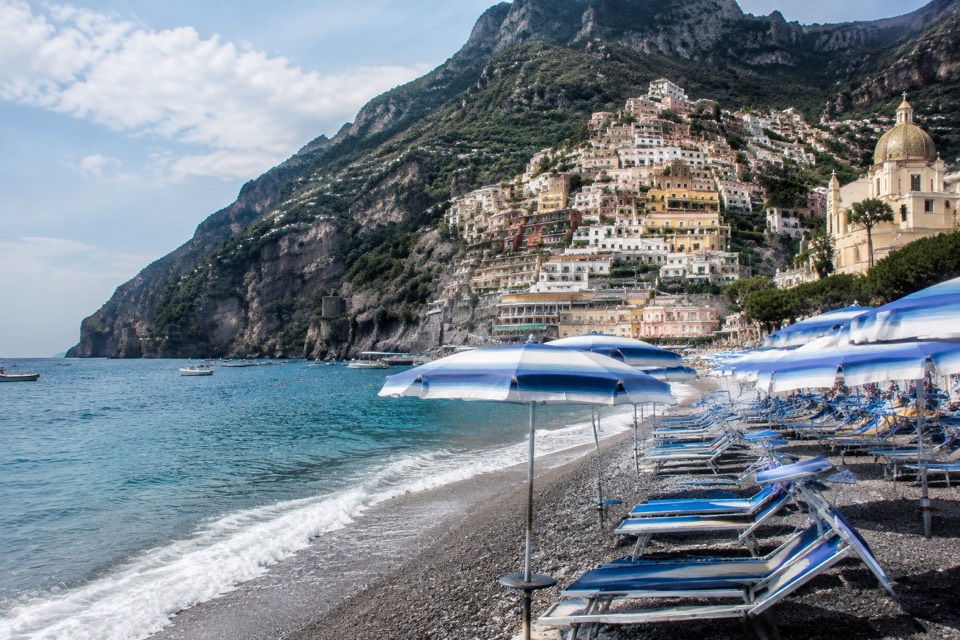
| Positano Beach | Positano | Beach and Marcello scenes | Free to see |
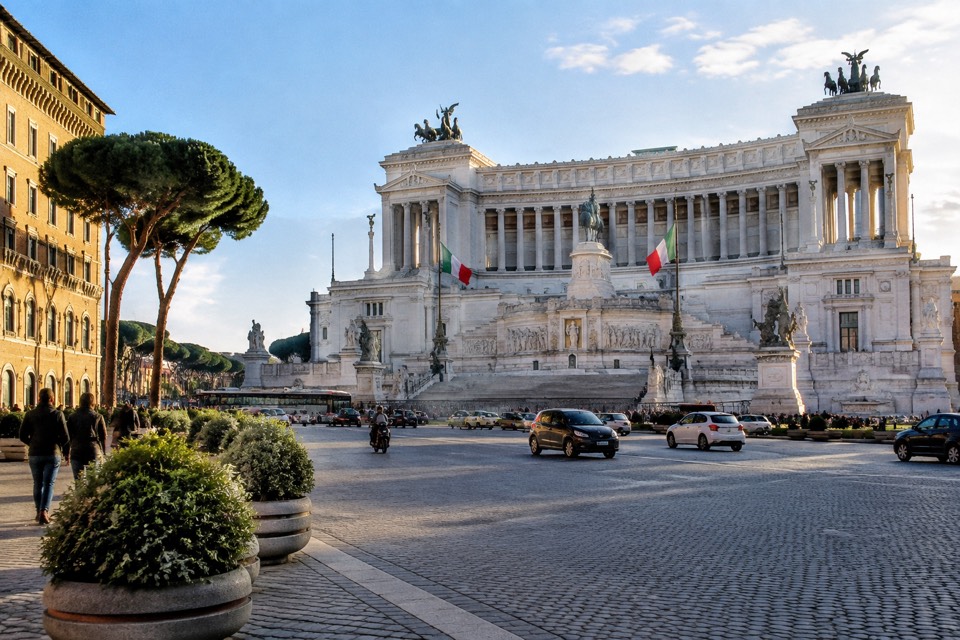
| Piazza Venezia | Rome | Rome arrival scene | Free to see |
Filming Locations Map
9 locations. The map loads when it scrolls into view.
Map data © OpenStreetMap contributors
Location By Location
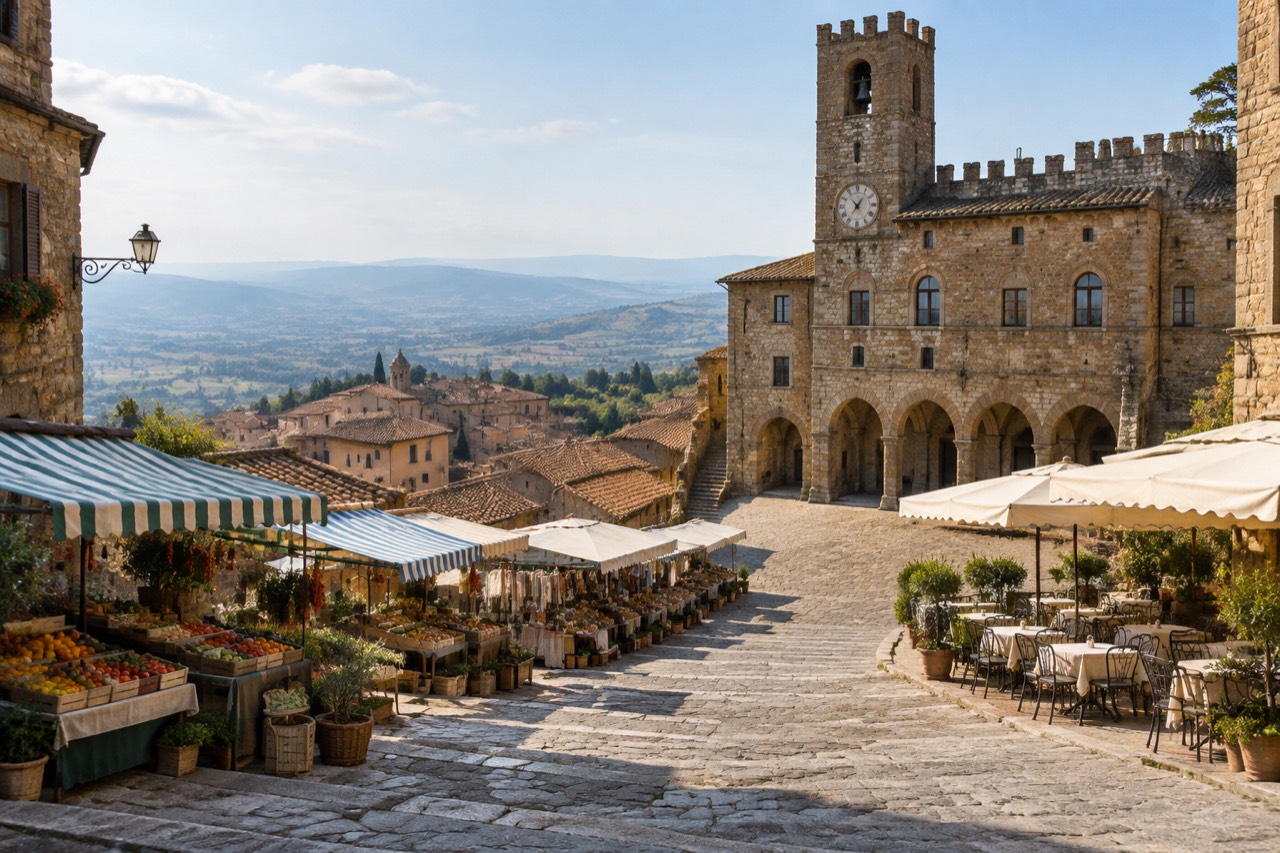
Cortona's central square hosted the market scene and much of the film's daily town life. Today it is free to visit and buzzing with exactly the café and shop atmosphere the movie captured, making it the easiest location match in town. Visitors can stand where Frances shopped and soak up the same rhythms of Cortonese life. It sits at the heart of the old town, a short walk from the other filming spots.
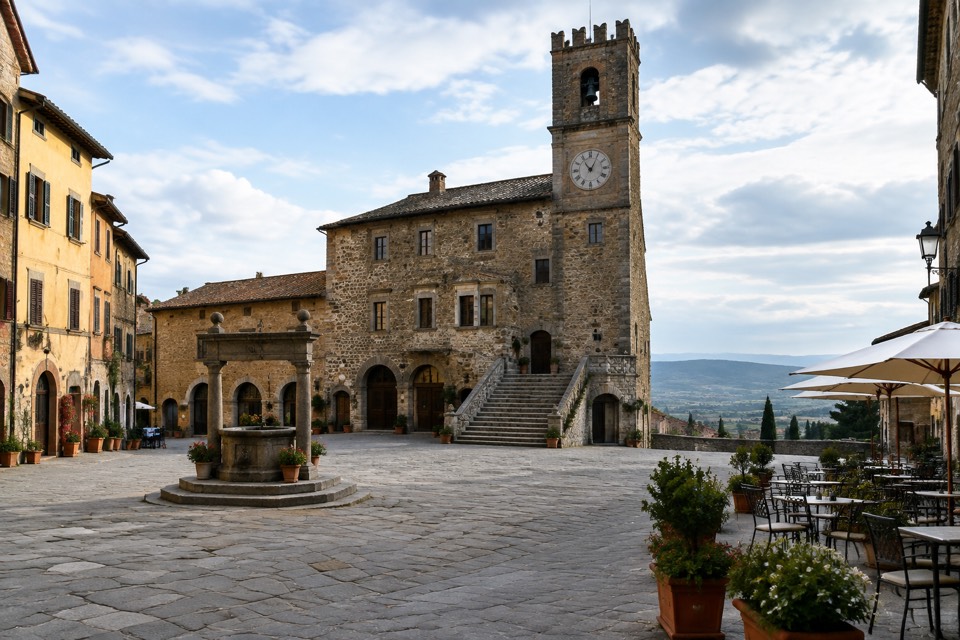
The fountain scene was shot here, next to the town hall, with a twist: the fountain was built by the production and does not exist. Arrive expecting a handsome historic square rather than a romantic water feature. Access is free and public, and the square anchors several of the town's cultural buildings. It pairs naturally with a visit to the theater just around the corner.
The interiors of the movie date scene were filmed in this historic theater, a Cortona landmark beside Piazza Signorelli. Access is ticketed, so visitors should check the theater's program for events or tour openings rather than expecting a drop-in experience. Catching a performance here adds a layer the film only hinted at. Otherwise the exterior and its position on the square are freely viewable.
The Duomo appears during a tour stop and in transitional scenes as the story moves through Tuscany's most recognizable city. The cathedral is publicly accessible, and travelers can climb the dome for panoramic views with a ticket. It makes a natural pairing with a Cortona trip since Florence is the region's main transport hub. Few film locations anywhere are this easy to fold into an ordinary itinerary.
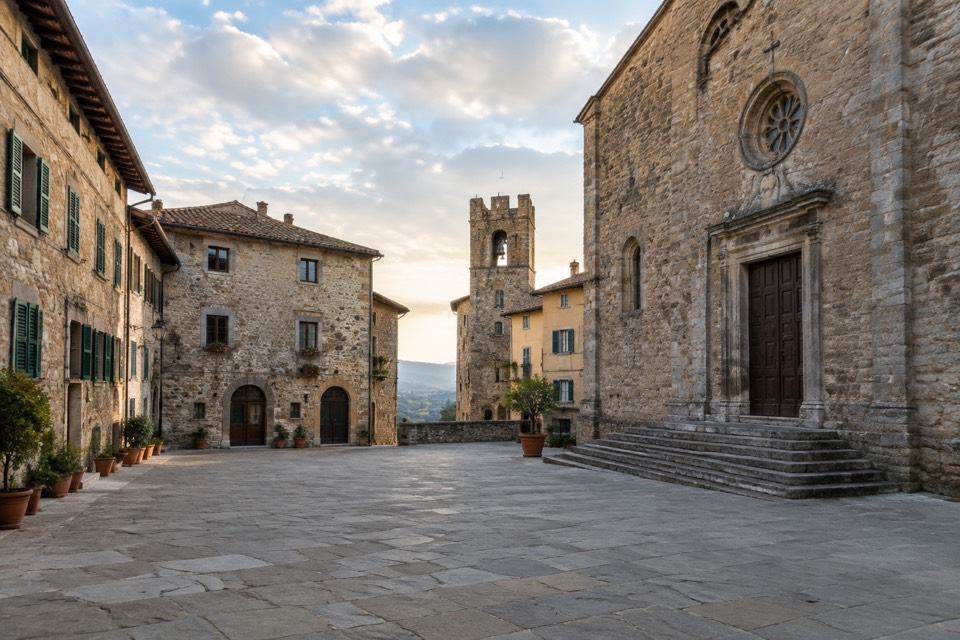
Montepulciano's Renaissance main square hosted the flag-waving ceremony and several exterior scenes. Access is free, though reaching the square involves a steep walk up through town, so comfortable shoes pay off. The sloping piazza, ringed by palazzi, is one of the most striking spaces in the film. Montepulciano also pairs well with Cortona on a single day trip through southern Tuscany.
The wedding scene was filmed at this church, a Renaissance masterpiece just outside Montepulciano's walls. Entry is free, and the setting, a honey-stone church framed by cypress-lined approach paths, photographs as beautifully now as it did on screen. It is a short downhill walk from Piazza Grande. Film fans and architecture lovers tend to rate it a highlight of any Montepulciano visit.
The beach scenes with Marcello were shot on this popular stretch of the Amalfi Coast, far from the film's Tuscan core. Access is public, but the beach gets very crowded in summer, so arrive early for a spot with a view. The dramatic cliffside town around it needs no cinematic pedigree to impress. It is the one major location requiring a separate trip south of Tuscany.
Frances' arrival scene in Rome was filmed at Piazza Venezia, the busy central junction beside the Altare della Patria. It is freely accessible and sits within walking distance of the Forum and other major sights, so it costs almost no extra effort to include. Traffic and crowds make it less serene than the film suggests. Still, it is an easy add-on for anyone routing through Rome.
Where It Is Set Versus Where It Was Filmed
The story is set in Tuscany, primarily around Cortona just as in Mayes' memoir, and the film largely honors that by shooting on location there. However, the production widened the map for cinematic effect, adding Positano, Rome, and Florence scenes, and recreating many interiors at Cinecittà Studios. The San Francisco opening used some real exteriors, but most of those interiors were studio builds in Rome.
The Studio Side
Cinecittà Studios in Rome handled interior work, including recreations of the San Francisco interiors used in the film's opening stretch. The historic studio complex is visitable today via the Cinecittà Studios Tour, which makes a strong complement to the on-location sites for anyone interested in how the film was actually assembled.
Tours That Visit These Locations
No dedicated Under the Tuscan Sun tour operates, but two small-group day trips from Florence cover Cortona and the surrounding towns where most of the film was shot, making them the easiest way to see the key locations without renting a car.
Small-Group Minivan, Max 8
Siena, Cortona, Montepulciano & Val D'Orcia: Minivan Tour, Max 8
A minivan tour capped at eight travelers that visits both Cortona and Montepulciano, the two hill towns with the most filming locations, along with Siena and the Val d'Orcia, with 139 reviews.
Day Trip From Florence
From Florence: Siena, Cortona, Montepulciano & Val D'Orcia
A full-day outing from Florence that stops in Cortona alongside Siena, Montepulciano, and the Val d'Orcia, covering several filming towns in one itinerary, from $213.24 per person.
Frequently Asked Questions
Can you visit the Villa Bramasole from the film?
Only from the outside. Villa Laura, the villa used in the film, is private property and viewable from the road. The real Bramasole owned by Frances Mayes is also nearby and also private.
Why did the filmmakers use a different villa?
The real Bramasole had already been renovated by Frances Mayes, so it could not play a run-down fixer-upper. The production found Villa Laura nearby, which had the unrenovated state the story required.
Is the fountain in Cortona real?
No. The fountain in Piazza Signorelli was built by the production for the film and does not exist. The square itself is real and free to visit.
When was Under the Tuscan Sun filmed?
Filming took place from September to November 2002, primarily in Tuscany, with additional work at Cinecittà Studios in Rome. The film was released in 2003.
Where was the wedding scene filmed?
At the Sanctuary of the Madonna di San Biagio, a church just outside Montepulciano. Entry is free, and it is a short walk from the town's Piazza Grande.
Is Cortona worth visiting for film fans?
Yes. Most of the film's town scenes were shot there, its squares and theater are easily explored on foot, and the film brought a lasting boost in tourism to the town.
Cortona alone justifies the trip for most fans, and a day trip from Florence that strings together Cortona, Montepulciano, and the Val d'Orcia covers the majority of the filming locations in a single outing. Save Positano and Rome for a second itinerary if time allows.